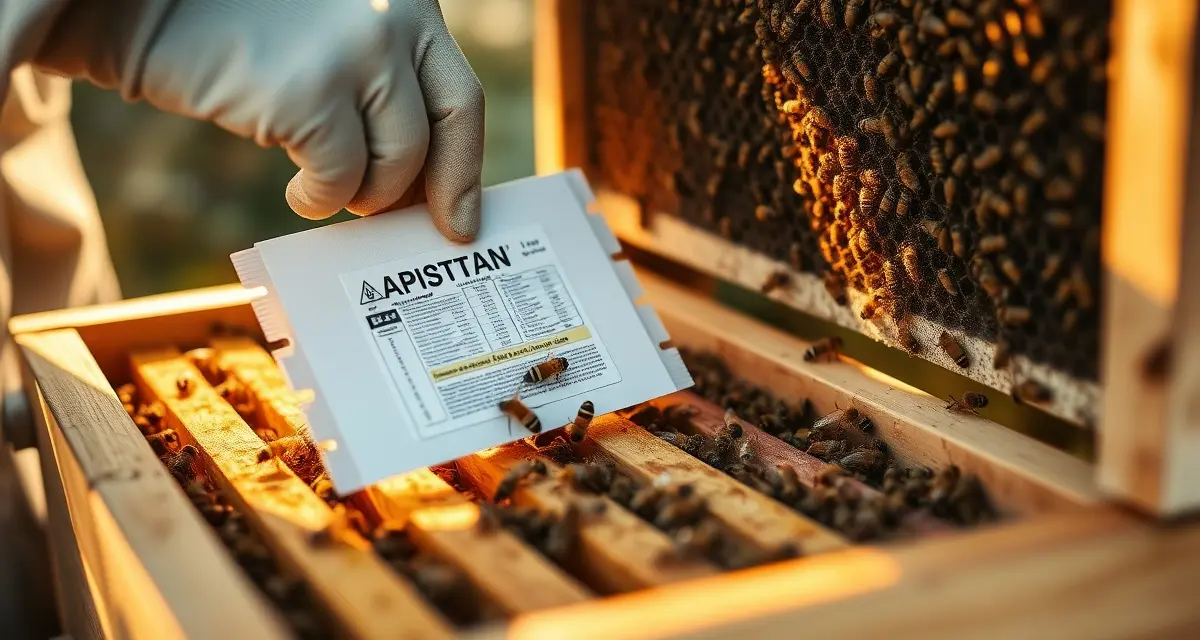
PHI for Apistan: When Can You Harvest Honey After Fluvalinate Treatment
Apistan is still one of the more common synthetic varroa treatments in American apiaries, and its pre-harvest interval rules are frequently misunderstood. The core rule is simple: you need 14 days between Apistan strip removal and placing honey supers. But the details, when the countdown starts, how long strips can stay in, and what wax residue buildup looks like over time, are where mistakes happen.
The PHI for Apistan fluvalinate honey harvest is 14 days after strip removal. Not 14 days after application. After removal.
TL;DR
- PHI (pre-harvest interval) is the required waiting period between the end of treatment and adding honey supers
- PHI varies by product: oxalic acid has no PHI for approved uses, MAQS has no PHI, Apivar requires supers to be off during treatment
- Applying treatments with supers on violates the label and may contaminate honey with residues
- State apiarists can ask for PHI compliance records during inspections
- Missing PHI windows is one of the most common compliance errors among small-scale beekeepers
- VarroaVault's PHI calendar blocks super-addition dates automatically based on your logged treatment dates
How Apistan's PHI Works
Fluvalinate (the active ingredient in Apistan) is lipophilic, it binds to fats, including beeswax. When Apistan strips are in the hive, fluvalinate diffuses into the comb and wax. After removal, there's a 14-day period during which residual fluvalinate in the wax continues to decline.
The 14-day PHI gives that residual time to dissipate to acceptable levels before honey is collected.
PHI countdown starts from strip removal date, not application date. This is a common source of confusion. Beekeepers sometimes count 14 days from when they applied strips, but that's not what the label specifies. You remove strips, then start counting.
Apistan PHI countdown starts from the strip removal date you log, not the application date, for legal compliance.
What Is the Apistan PHI for Honey Harvest?
14 days after strip removal before adding honey supers.
Practical translation: if you remove Apistan strips on August 1, you can add honey supers on August 15. Any honey harvested from supers added after August 15 complies with the label PHI.
Note: supers should not be present during Apistan treatment. The treatment requires super removal at application, and supers can only return after the PHI.
Strip Duration: How Long Can Apistan Stay In?
The Apistan label specifies a treatment period of 6-8 weeks (42-56 days). Strips can stay in for up to 56 days.
Here's an important risk: Apistan strips left in longer than 56 days meaningfully increase wax residue levels. Beyond 56 days, the strip continues to leach fluvalinate into the comb without the treatment period justification. The result is elevated residue in wax that persists long after the strips are finally removed.
This is a documented problem in some commercial operations where strips were left in for multiple months or across seasons. The wax residue from fluvalinate accumulates just as coumaphos residue does, and elevated fluvalinate levels in beeswax have been linked to reproductive problems in colonies.
The time-based risk is a strong argument for tracking application dates with a system that reminds you when strips are due for removal.
When Do I Remove Apistan Strips Before Harvesting?
Work backwards from your planned harvest date:
- Identify your harvest date
- Subtract 14 days, that's the last day you can have strips out by
- Subtract another 42-56 days, that's when you need to apply strips
Example: You want to harvest by September 15.
- Strips must be removed by September 1 (14 days before harvest)
- Strips should be applied no later than July 12-20 (42-50 days before September 1 removal)
This planning window means you should know your rough harvest target before you apply strips. If your main fall flow ends in late September, starting Apistan treatment in late July keeps the PHI compliant.
Apistan and Resistance
Fluvalinate (tau-fluvalinate) resistance in varroa mites is well-documented and more widespread than amitraz resistance in US populations. In many areas, Apistan resistance is common enough that the product is less effective than it once was.
If you're using Apistan and your post-treatment count doesn't show 90%+ mite reduction, resistance is a likely explanation, particularly if your application protocol was correct.
VarroaVault tracks your Apistan efficacy scores alongside your application records, making it straightforward to spot a declining efficacy trend across treatment cycles.
Tracking Apistan PHI in VarroaVault
When you log an Apistan treatment, VarroaVault records:
- Application date
- Number of strips
- Scheduled removal date (based on your intended treatment period)
- Strip removal date (when you actually remove them)
- PHI countdown from removal date
- Cleared-for-harvest date
The system distinguishes between the application date and the removal date for PHI purposes, so the 14-day countdown starts correctly from when strips come out, not when they went in. This prevents the common error of counting PHI from application.
For the full pre-harvest interval tracking system across all treatment types, see the pre-harvest interval tracker. For tracking your Apistan strip history and efficacy over time, see the Apistan tracking feature within your VarroaVault account.
What is the Apistan PHI for honey harvest?
14 days after strip removal. Honey supers should not be present during Apistan treatment, and cannot be added until 14 days after strips are removed from the hive. The countdown starts from strip removal, not from the application date.
When do I remove Apistan strips before harvesting?
At least 14 days before you plan to add honey supers. Work backwards from your harvest target: identify your super-on date, subtract 14 days to find the required strip removal date, then subtract 42-56 days to find the latest possible application date. Strips must stay in for at least 42 days (minimum treatment period) but cannot exceed 56 days due to increasing wax residue levels with extended exposure.
Does VarroaVault track my Apistan removal date and PHI?
Yes. VarroaVault logs your Apistan application date, scheduled removal date, and actual removal date. The 14-day PHI countdown starts from the removal date you log, not the application date, matching the label requirement. Your cleared-for-harvest date is calculated and displayed on your colony calendar. If your planned super-on date falls within the PHI window, the system flags the conflict before you act.
How do I know if my varroa treatment is working?
Run a mite count 2-4 weeks after the treatment ends and compare it to your pre-treatment count. The efficacy formula is: ((pre-count - post-count) / pre-count) x 100. A result above 90% indicates effective treatment. Results below 80% should trigger investigation for possible resistance, application error, or reinfestation. Log both counts in VarroaVault to track efficacy trends across treatment cycles.
How often should I check mite levels in my hives?
At minimum, once per month (every 3-4 weeks) during the active season. Increase to every 2 weeks when counts are near threshold or after a treatment to verify it worked. In fall, monitoring frequency matters most because the window to treat before winter bees are raised is narrow. VarroaVault's monitoring reminders can be set to your preferred interval for each apiary.
What records should I keep for varroa management?
Each record should include: date of count or treatment, hive identifier, monitoring method used, number of bees sampled, mites counted, infestation percentage, treatment product name and EPA registration number, dose applied, treatment start and end dates, and PHI end date. State apiarists typically expect this level of detail during inspections. VarroaVault captures all of these fields in a single log entry.
FAQ
What is PHI for Apistan: When Can You Harvest Honey After Fluvalinate Treatment?
Apistan's pre-harvest interval (PHI) is 14 days — the required waiting period between removing fluvalinate strips from the hive and adding honey supers. The clock starts at strip removal, not application. Apistan strips can remain in the hive for up to 56 days during treatment, but supers must stay off the entire time and for 14 full days after the strips come out. Skipping this window risks fluvalinate residues transferring into harvested honey.
How much does PHI for Apistan: When Can You Harvest Honey After Fluvalinate Treatment cost?
Apistan strips themselves are relatively affordable, typically $20–$40 for a pack treating several hives. The real cost of PHI compliance is operational: lost honey production during treatment windows, which can span 6–10 weeks including the 56-day application period plus the 14-day post-removal wait. Timing treatment outside of honey flows minimizes this cost. Non-compliance costs — contaminated honey, failed residue tests, or regulatory penalties — far exceed the price of the strips.
How does PHI for Apistan: When Can You Harvest Honey After Fluvalinate Treatment work?
Fluvalinate, the active ingredient in Apistan, works by disrupting the nervous system of Varroa destructor mites. Strips release the chemical slowly into the hive environment over the treatment period. The PHI exists because fluvalinate is lipophilic — it binds to wax — and can migrate into honey if supers are present during or immediately after treatment. The 14-day post-removal window allows residue levels to fall below safety thresholds before honey supers are added.
What are the benefits of PHI for Apistan: When Can You Harvest Honey After Fluvalinate Treatment?
Following Apistan's PHI correctly protects your honey's safety, your legal compliance, and your market access. Residue-free honey is increasingly important for wholesale buyers, co-ops, and certified operations. Proper PHI documentation also satisfies state apiary inspectors and supports your record-keeping under good beekeeping practice standards. Beyond regulatory benefits, timing Apistan treatments correctly — outside honey flows — typically means little to no actual honey yield is lost while still achieving effective mite knockdown.
Who needs PHI for Apistan: When Can You Harvest Honey After Fluvalinate Treatment?
Any beekeeper using Apistan strips needs to understand and follow PHI rules. This includes hobbyists, sideliners, and commercial operations alike — label law applies regardless of scale. Beekeepers selling honey, whether at farmers markets, direct-to-consumer, or wholesale, face the greatest risk from non-compliance. State apiarists can request treatment and harvest records during inspections. If you log treatments in VarroaVault, the PHI calendar automatically blocks super-addition dates based on your recorded strip removal date.
How long does PHI for Apistan: When Can You Harvest Honey After Fluvalinate Treatment take?
The full Apistan treatment cycle runs up to 56 days for strip application, plus the mandatory 14-day PHI after strip removal — roughly 10 weeks total from placement to super addition. Most beekeepers apply Apistan in late summer or fall after the main honey flow ends, avoiding any lost production. If treated mid-season, supers must remain off the entire time. Planning treatment around your local nectar calendar is the most effective way to minimize impact on harvestable honey.
What should I look for when choosing PHI for Apistan: When Can You Harvest Honey After Fluvalinate Treatment?
When managing fluvalinate PHI, the key factors to track are: strip placement date, maximum 56-day removal deadline, and the 14-day post-removal countdown before supers go back on. Watch for wax residue buildup — repeated Apistan use increases fluvalinate concentration in comb over time, which can elevate honey residues independent of PHI compliance. Rotating treatment chemistries each season reduces this risk. Also confirm your Apistan lot is within its shelf life, as degraded strips may underperform and tempt longer-than-label applications.
Is PHI for Apistan: When Can You Harvest Honey After Fluvalinate Treatment worth it?
Yes — following Apistan's PHI is legally required and practically important. Label compliance is federal law under FIFRA, and violations can result in honey being deemed adulterated. For beekeepers selling honey, the reputational and financial risk of a failed residue test outweighs any short-term gain from rushing supers back on. The 14-day wait is short relative to a full season. Using a PHI tracker like VarroaVault's calendar removes the guesswork and gives you defensible records if your operation is ever inspected.
Sources
- American Beekeeping Federation (ABF)
- USDA ARS Bee Research Laboratory
- Honey Bee Health Coalition
- Penn State Extension Apiculture Program
- Project Apis m.
Get Started with VarroaVault
PHI compliance is not complicated when your treatment dates and harvest windows are tracked in the same system. VarroaVault automatically calculates PHI end dates for every treatment you log and blocks honey super addition during restricted periods. See pricing and free tools at varroavault.com.