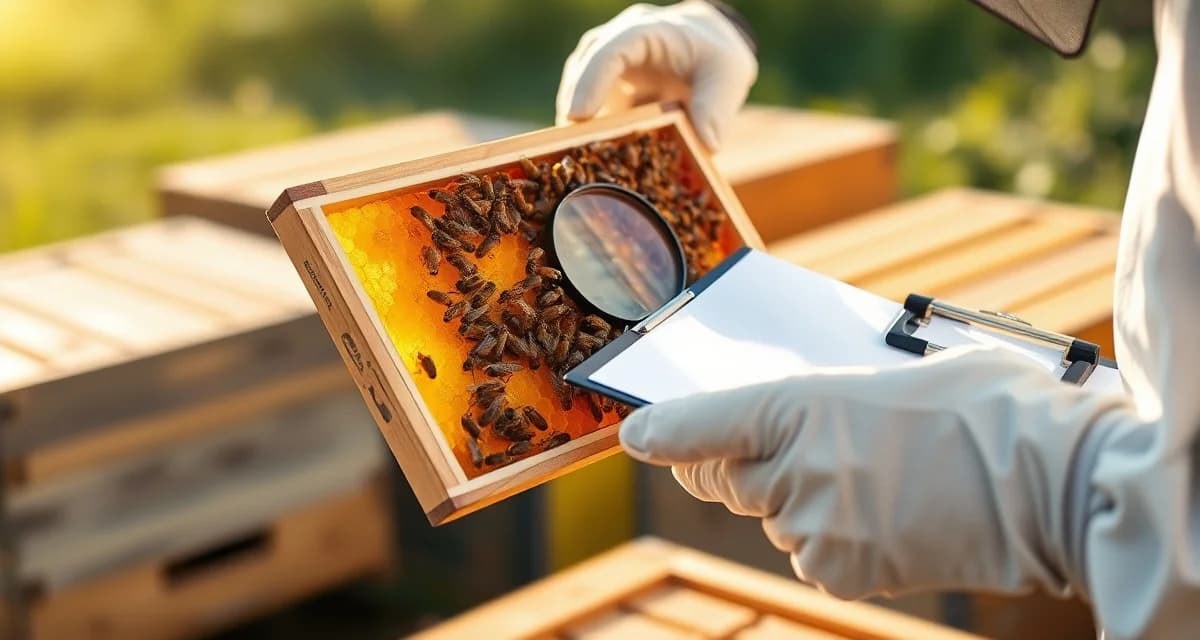
How to Check a Newly Purchased Hive for Varroa
Buying bees without checking for varroa is like buying a used car without checking the tires. The seller may have told you the mite levels are fine. They may genuinely believe that. But until you count for yourself, you do not actually know. This matters because a newly purchased hive with high mite levels will decline quickly, fail before you realize what is happening, and in the meantime spread mites to any other colonies you have.
Why Sellers Cannot Always Guarantee Mite Levels
Package bees originate from large-scale production operations in the southern US. The packages are produced quickly during spring buildup, and mite monitoring of every individual package before sale is not standard practice. A package may carry a meaningful number of mites that were present on the original colony.
Nucleus colonies (nucs) come from established colonies and are more likely to have accurate mite histories if the seller is running a serious varroa management program. But "serious varroa management" is not uniform across the industry. Some nuc producers monitor regularly and treat consistently. Others treat rarely or only when they see visible symptoms.
Established hives bought from another beekeeper carry the most uncertainty. You are getting the mite history of that colony, whether or not the seller accurately knows what that history is.
The only way to know where your newly purchased bees actually stand is to count the mites yourself.
When to Count After Purchase
For package bees: Wait 4 to 5 weeks after installation before the first count. The queen in a package begins laying within a few days of release. You need at least one round of brood development before you have a meaningful nurse bee population to sample. Mite counts done immediately after package installation, when there is no capped brood, reflect only phoretic mites and will be artificially low.
For nucleus colonies: Count within the first week of receipt. A nuc already has established brood and a nurse bee population. An alcohol wash can be done as soon as the colony is settled, ideally the day you receive it or within the first 48 hours.
For established hives: Count the day you take possession. An established hive with brood present can be sampled immediately. Do not wait.
How to Conduct the Alcohol Wash
Collect 100 bees from a brood frame (not a honey frame or the outside of the cluster). Nurse bees near capped brood carry more mites than foragers. Use a half-pint mason jar with a screen mesh lid, or a purpose-made mite wash device.
Add 70% isopropyl alcohol to cover the bees completely. Seal the container and shake for 30 to 60 seconds. Pour the wash through the screen over a white plate or tray. Discard the bees (they do not survive the wash). Count the brown oval-shaped mites that washed off into the liquid on the plate.
Divide the number of mites by 100 and express as a percentage. Three mites in 100 bees is a 3% infestation rate.
Interpreting Your Results
- Below 1%: Low. Monitor on a regular schedule. No immediate treatment needed.
- 1 to 2%: Moderate. Monitor closely. Treat before the season progresses.
- Above 2%: High. Treat now, regardless of whether you have just installed the bees.
If you find a high count in a newly installed package, contact the seller. Some sellers will provide replacement bees or partial refunds for packages with demonstrably high mite levels. Whether or not you pursue that, treat the colony regardless of the commercial resolution.
Treatment After a High Purchase Count
The treatment you choose for a newly installed package depends on whether brood is present. A package that has been installed for less than 2 weeks has minimal or no capped brood. OAV is highly effective in this quasi-broodless state. Apply one to three OAV treatments over 15 days, then monitor again.
For a nuc or established hive with full brood, Apivar strips are the most straightforward option. Apply immediately in the brood area and leave for the labeled duration. This is not ideal timing from a honey production perspective, but protecting the colony's survival takes priority over early honey harvest from a new acquisition.
Starting a Record From Day One
The mite count you do at acquisition is the founding data point for this colony's record. Log it in VarroaVault with the acquisition date, source (package, nuc, established hive, swarm), and seller if relevant. Any treatment applied after the initial count becomes the first entry in the treatment log.
Starting a clean record from the day you receive the bees gives you a complete longitudinal history of the colony. One year in, that history tells you whether this hive is a problem colony that always runs high counts or a reliable performer that stays clean between treatments. That information guides requeening decisions, placement decisions, and how much attention to allocate to the hive relative to others in your operation.
FAQ
What is How to Check a Newly Purchased Hive for Varroa?
Checking a newly purchased hive for varroa means conducting a mite count on any package, nuc, or established colony you have just acquired before integrating it with existing bees. It involves using a standardized method — typically an alcohol wash or sugar roll — to determine how many Varroa destructor mites are present per 100 bees. This baseline measurement tells you whether treatment is needed immediately and protects the rest of your apiary from a mite-loaded introduction.
How much does How to Check a Newly Purchased Hive for Varroa cost?
Checking your new hive for varroa costs nothing beyond basic supplies you likely already own. An alcohol wash requires a jar, rubbing alcohol, and a mesh lid. A sugar roll needs powdered sugar and the same jar setup. Both methods use roughly half a cup of bees from a brood frame. The only real cost is your time — roughly 15 to 20 minutes per hive — which is a small price given what a high-mite colony can cost you in losses.
How does How to Check a Newly Purchased Hive for Varroa work?
You collect a sample of approximately 300 bees (about half a cup) directly from a brood frame where the queen has been active. For an alcohol wash, you submerge the sample in isopropyl alcohol, shake for 30 to 60 seconds, and count the mites that fall through a mesh screen into the liquid. Divide mite count by bee count and multiply by 100 to get mites per 100 bees. Above 2 percent typically warrants immediate treatment.
What are the benefits of How to Check a Newly Purchased Hive for Varroa?
Checking a newly purchased hive for varroa gives you an accurate baseline instead of relying on the seller's word or assumptions. It lets you catch high infestation levels before the colony weakens, before you introduce the hive to your apiary, and before mites spread to your other colonies. Early detection means earlier treatment options, including lower-impact treatments that work when mite levels are still manageable. It also builds the diagnostic habit that separates successful beekeepers from those who repeatedly lose hives to unexplained decline.
Who needs How to Check a Newly Purchased Hive for Varroa?
Any beekeeper who has purchased bees needs to check for varroa, regardless of how reputable the seller is. This applies to beginners installing their first package, experienced hobbyists expanding with a nuc, and sideliners buying established hives from retiring beekeepers. Sellers cannot guarantee mite levels in every individual colony they sell, and production timelines often preclude thorough pre-sale testing. If you are adding any new bees to your operation, you are the last line of defense before those mites enter your apiary.
How long does How to Check a Newly Purchased Hive for Varroa take?
The actual mite check takes 15 to 20 minutes from finding the right frame to reading your result. Getting setup ready adds another five minutes. The harder question is timing: you should check within the first few days of acquiring the colony, ideally before it is placed near your other hives. If you are installing a package onto foundation, wait until capped brood is present, since mites reproduce in capped cells and early counts on a package with no brood can understate the true infestation.
What should I look for when choosing How to Check a Newly Purchased Hive for Varroa?
When checking a newly purchased hive for varroa, prioritize accuracy and repeatability over speed. Use the alcohol wash method rather than the sugar roll — research consistently shows alcohol washes capture more mites and give more reliable counts. Sample from a frame with open brood where nurse bees are active, not from honey frames or the outer edges of the box. Use a proper measuring vessel to confirm your bee sample size. Record your result with the date so you have a true baseline for tracking changes over subsequent months.
Is How to Check a Newly Purchased Hive for Varroa worth it?
Yes, checking your newly purchased hive for varroa is worth it without qualification. Varroa is the leading driver of colony loss in managed honeybees, and a high-mite introduction can collapse a new colony within weeks while seeding your entire apiary. The 20 minutes required to run an alcohol wash is negligible compared to the cost — financial and otherwise — of losing a hive, treating a mite outbreak across multiple colonies, or starting over as a beekeeper. Knowing your mite levels is the foundational habit of sustainable beekeeping.