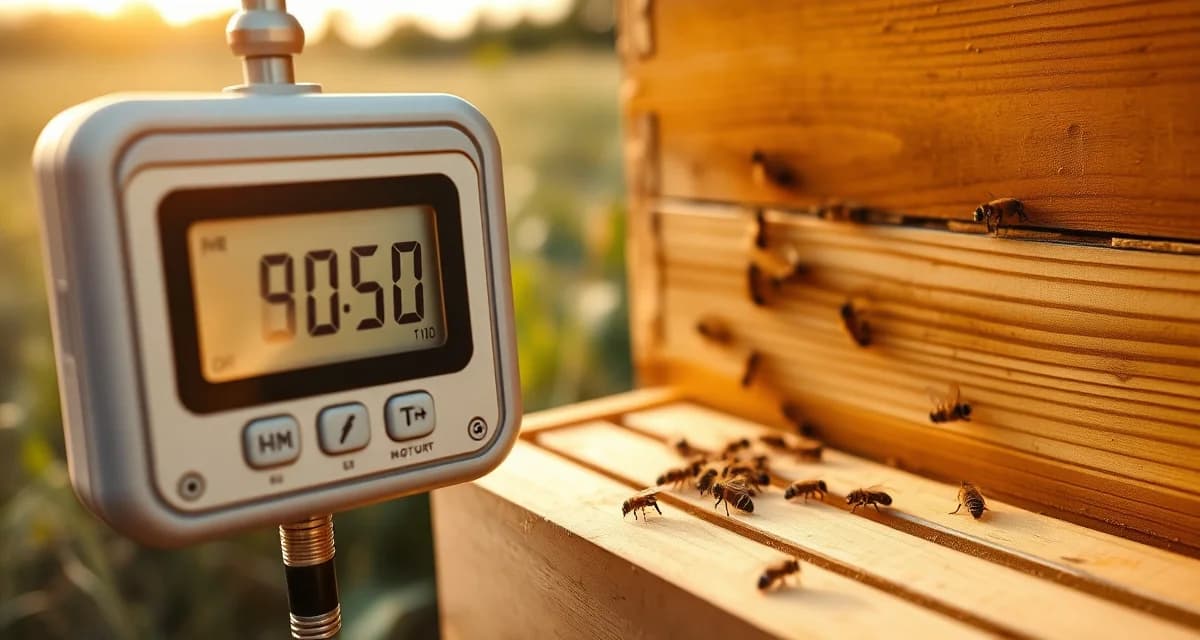
Hive Scale Monitoring and Varroa: Using Weight Data to Detect Colony Stress
A healthy forager colony losing more than 10% body weight in a week outside a dearth period should trigger an immediate mite count. Weight loss at that rate isn't just about food reserves. It's a signal that the colony is losing foragers faster than normal, which can indicate mite-related premature death of worker bees.
Here's how to integrate hive scale data into your varroa management early warning system.
TL;DR
- Varroa monitoring should happen at minimum once per month during active season (every 3-4 weeks)
- Sticky board counts are the least accurate method; alcohol wash is the gold standard
- The 2% threshold in spring/summer and 1% in fall are widely recommended action points
- Monitoring before and after every treatment allows efficacy calculation and resistance detection
- A count from the outer frames or entrance produces lower, less accurate results than brood nest samples
- VarroaVault stores every count with date, method, and result to build a trend dataset over multiple seasons
How Varroa Affects Colony Weight
Varroa-stressed colonies lose weight for two interconnected reasons:
Premature forager death: Mite-damaged bees have shorter lifespans. Bees that would normally live 21-28 days as field bees may die after 10-14 days. Fewer foragers mean less incoming nectar weight. During a nectar flow, a colony with high mite loads collects 20-30% less honey than a healthy colony.
Reduced nurse bee population: As mite loads climb, the nurse bee (house bee) population declines. Fewer nurse bees means less food processing, less wax production, and a colony that progressively loses population while still consuming stores.
Winter warning signal: In winter, a colony cluster that loses more than 10% body weight per week is consuming its honey stores at an unsustainable rate. This can indicate a large cluster burning through reserves (not necessarily mite-related) or a distressed, fragmented cluster characteristic of mite-weakened winter populations.
What Normal Weight Patterns Look Like
Understanding what normal hive weight change looks like helps you recognize abnormal patterns:
During an active nectar flow: Weight gains of 1-5 pounds per day are typical for a productive colony in a good flow. Some flows produce peak gains of 8-10 pounds per day.
During a dearth: Weight loss of 0.5-1.5 pounds per day is normal as the colony consumes stores without incoming nectar.
During spring buildup: Slow weight loss or flat weight as the colony builds brood population; new brood and bees weigh more than the honey they consume.
Late summer dearth + potential varroa stress: Unexpected weight loss of 2+ pounds per day outside a known dearth period warrants investigation. At this rate, a colony loses significant weight in a week without obvious environmental cause.
Integrating Scale Data With Mite Count Records
A hive scale alone doesn't tell you whether weight loss is from dearth, robbing, a weak queen, or mite stress. But combined with your mite count history, patterns emerge:
Scenario 1: Weight loss coincides with rising mite count trend
You logged counts of 1.5% in June and 3% in July. Your scale shows unusual weight loss in late July. This combination strongly suggests varroa-related forager death is contributing to the weight loss. Treat immediately.
Scenario 2: Weight loss without known mite pressure
Your last count was 1% in June and weight is dropping unusually in July. This is a prompt to recount mites immediately. You may have missed a rapid increase.
Scenario 3: Weight loss during known dearth
Your scale shows typical dearth-pattern weight loss matching known flow patterns in your area. No count needed urgently; monitor on your regular schedule.
Setting Up Hive Scale Integration in VarroaVault
VarroaVault's hive scale data integration allows weight loss events to trigger a recommended mite count. Here's how to configure it:
- Go to Hive Settings > Integrations for the hive with a scale.
- Select your scale brand/type from the integration list, or use the manual weight entry option if your scale doesn't have an API.
- Set your weight loss alert threshold. Default recommendation: flag any 7-day weight loss exceeding 10% of colony body weight.
- Enable the auto-recommendation: when a weight loss alert fires, VarroaVault automatically generates a count recommendation for that hive.
If your scale connects via API (Broodminder, Arnia, custom integrations), VarroaVault pulls weight data automatically. For non-connected scales, you can log weekly weight manually.
Compatible Scale Systems
VarroaVault integrates with several commercial hive monitoring systems. Check the current integration list at varroavault.com for the most current compatibility information, as new integrations are added regularly.
For beekeepers without commercial scales, a bathroom scale placed under the hive during inspections gives you a reference weight. Logging monthly hive weight in VarroaVault's inspection notes creates a useful trend record even without continuous monitoring.
What Weight Data Can't Tell You
Hive scales are a trigger for investigation, not a diagnosis. Weight loss from a large robbing event looks the same as weight loss from forager death on a scale graph. Weight gain during a flow masks mite-related population decline if the colony is still net-positive in weight.
Scale data is most valuable as an early warning trigger. When combined with regular mite counts, it becomes part of a more complete colony health monitoring picture rather than a standalone diagnostic.
Frequently Asked Questions
Can hive weight data help detect varroa problems?
Yes, indirectly. Unusual weight loss outside known dearth periods can indicate varroa-related premature forager death. When weight loss events coincide with known rising mite count trends, the combination is a strong signal. Weight data is best used as a trigger for mite counting rather than as a standalone varroa diagnostic.
Does VarroaVault integrate with hive scales?
Yes. VarroaVault integrates with several commercial hive monitoring systems via API, and allows manual weight entry for any scale. When a weight loss alert threshold is crossed, VarroaVault automatically generates a mite count recommendation for that hive. Check varroavault.com for the current list of integrated scale systems.
What weight loss pattern should trigger a varroa check?
A healthy forager colony losing more than 10% of body weight in a week outside a confirmed dearth period should trigger an immediate mite count. In practical terms, this means a colony that was 80 pounds losing more than 8 pounds in a week without an obvious environmental explanation warrants investigation.
How do I know if my varroa treatment is working?
Run a mite count 2-4 weeks after the treatment ends and compare it to your pre-treatment count. The efficacy formula is: ((pre-count - post-count) / pre-count) x 100. A result above 90% indicates effective treatment. Results below 80% should trigger investigation for possible resistance, application error, or reinfestation. Log both counts in VarroaVault to track efficacy trends across treatment cycles.
How often should I check mite levels in my hives?
At minimum, once per month (every 3-4 weeks) during the active season. Increase to every 2 weeks when counts are near threshold or after a treatment to verify it worked. In fall, monitoring frequency matters most because the window to treat before winter bees are raised is narrow. VarroaVault's monitoring reminders can be set to your preferred interval for each apiary.
What records should I keep for varroa management?
Each record should include: date of count or treatment, hive identifier, monitoring method used, number of bees sampled, mites counted, infestation percentage, treatment product name and EPA registration number, dose applied, treatment start and end dates, and PHI end date. State apiarists typically expect this level of detail during inspections. VarroaVault captures all of these fields in a single log entry.
What is Hive Scale Monitoring and Varroa: Using Weight Data to Detect Colony Stress?
Hive scale monitoring combined with varroa management is a data-driven approach to colony health tracking. By continuously measuring hive weight, beekeepers can detect abnormal weight loss patterns that signal varroa mite stress. A colony losing more than 10% of its weight in a week outside a dearth period indicates foragers are dying prematurely due to mite damage, prompting an immediate mite count before the situation becomes critical.
How much does Hive Scale Monitoring and Varroa: Using Weight Data to Detect Colony Stress cost?
Hive scale monitoring for varroa detection involves no direct cost beyond the scale hardware itself. The monitoring methodology described here is freely applicable knowledge. VarroaVault offers tools to log and track mite counts, weight trends, and treatment records over multiple seasons, helping beekeepers build actionable datasets. The real investment is in a quality hive scale and consistent monitoring habits rather than any proprietary program or subscription service.
How does Hive Scale Monitoring and Varroa: Using Weight Data to Detect Colony Stress work?
Hive scales record continuous weight data, which beekeepers analyze for unusual loss patterns. A healthy colony gains weight during nectar flows and loses weight gradually during dearth. When weight drops sharply outside those expected windows, it suggests forager loss rates are abnormally high. Beekeepers then perform an alcohol wash mite count to confirm varroa pressure, calculate infestation levels against the 2% spring/summer or 1% fall thresholds, and treat accordingly.
What are the benefits of Hive Scale Monitoring and Varroa: Using Weight Data to Detect Colony Stress?
Integrating scale data into varroa management provides an early warning signal without disturbing the hive. Weight anomalies can surface mite stress days before visible symptoms appear, allowing treatment before population collapse. Combined with regular alcohol wash counts logged in a platform like VarroaVault, beekeepers can track efficacy across treatments, detect resistance patterns, and build a multi-season dataset that makes colony management increasingly precise and proactive over time.
Who needs Hive Scale Monitoring and Varroa: Using Weight Data to Detect Colony Stress?
Any beekeeper managing colonies through active foraging season benefits from this approach, but it is especially valuable for those managing multiple hives, raising queens, or operating in high-varroa-pressure regions. Hobbyists who have lost colonies to unexplained decline and commercial beekeepers seeking early intervention tools will find weight-plus-mite-count monitoring a practical system for reducing losses and making treatment decisions based on real colony data rather than guesswork.
Related Articles
- Varroa Treatment for Small-Scale Commercial Operations: 50-200 Hive Logistics
- How to Manage Varroa in a 300-Hive Commercial Operation: Systems and Scale
- Using Hive Splits as a Varroa Management Tool
Sources
- American Beekeeping Federation (ABF)
- USDA ARS Bee Research Laboratory
- Honey Bee Health Coalition
- Penn State Extension Apiculture Program
- Project Apis m.
Get Started with VarroaVault
The information in this guide is most useful when you have your own mite count data to apply it to. VarroaVault stores every count, flags threshold crossings automatically, and builds the treatment history you need for state inspections and effective management decisions. See pricing and free tools at varroavault.com.