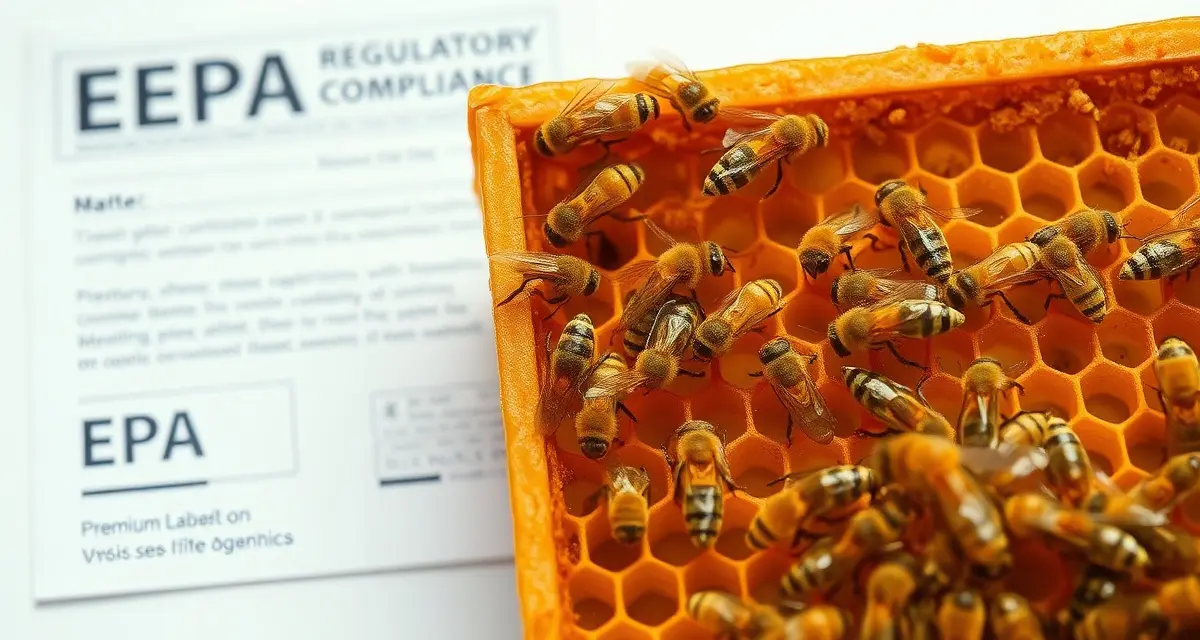
Can I Use Grocery Store Oxalic Acid for Bee Treatment?
Using unlabeled oxalic acid for varroa treatment violates FIFRA and can result in fines of up to $25,000. This isn't a gray area. Grocery store oxalic acid wood bleach products (like Barkeeper's Friend or deck cleaners) are not registered for use on honey bees, and applying them to beehives is a pesticide misuse violation under federal law.
The answer is no, and the reasons beyond legality matter for your bees too.
TL;DR
- Oxalic acid (Api-Bioxal) is approved for dribble and vaporization methods; both kill only phoretic mites on adult bees
- Vaporization is more effective than dribble when brood is present because bees can contact vaporized acid across the colony
- The extended vaporization protocol (every 5 days for 3 applications) compensates for mites in capped brood
- Oxalic acid has no PHI restriction for honey supers when used according to the Api-Bioxal label
- Efficacy during true broodless periods can reach 95%; with brood present, efficacy drops to 50-70%
- Always wear a respirator and eye protection during vaporization; oxalic acid vapor causes lung damage
Why Grocery Store OA Is Illegal for Bee Treatment
The Federal Insecticide, Fungicide, and Rodenticide Act (FIFRA) governs all pesticide use in the United States. Under FIFRA, a pesticide product can only be used on the pest, crop, site, and application method listed on its EPA-registered label.
Grocery store oxalic acid products are not EPA-registered for varroa mite control in honey bee colonies. The label on a deck cleaner does not say "for varroa control in honey bees." Therefore, using it on your bees is an off-label pesticide application.
Off-label pesticide use is not a minor technicality: it's a federal violation that the EPA, state departments of agriculture, and state apiary inspectors can enforce. Fines for FIFRA violations start at $1,000 for minor violations and scale up to $25,000 per violation for knowing, willful violations.
What OA Products Are Registered for Varroa Treatment
Api-Bioxal (by Véto-pharma) is the only USDA/EPA-registered oxalic acid product approved for varroa control in honey bees in the United States. It's available through beekeeping supply retailers including Mann Lake, Brushy Mountain, and many others.
Api-Bioxal is pharmaceutical-grade oxalic acid dihydrate manufactured under controlled conditions with verified purity and concentration. The label specifies:
- Application methods (dribble and vaporization)
- Doses per method (5ml per seam for dribble, 1g per brood box for vaporization)
- Maximum doses
- Application frequency restrictions
- PPE requirements
- PHI specifications
These label requirements exist because they were tested and established through EPA registration. The label is the legal authority for how the product must be used.
Isn't Oxalic Acid Just a Commodity Chemical?
Yes, oxalic acid is a commodity chemical. The same molecule exists in grocery store products and in Api-Bioxal. The key differences:
Purity and concentration. Api-Bioxal is pharmaceutical-grade with verified purity. Grocery store products may contain surfactants, dyes, stabilizers, or other additives that are toxic to bees. Deck cleaner products specifically should never go into a beehive regardless of the base chemistry.
Label authority. Without an EPA-registered label for varroa treatment, there's no documented dose, no documented safety profile for bees or honey, and no legal protection when you use the product. You're experimenting on food-producing animals without regulatory sanction.
PHI and residue. Api-Bioxal's registration includes honey safety data establishing that oxalic acid residue in honey at the specified doses is within safe limits. No such data exists for grocery store products used on bees. If you're selling honey, this matters enormously.
The Cost Argument Doesn't Hold
Beekeepers sometimes consider unlabeled OA because Api-Bioxal costs more per application than raw commodity OA. The math looks attractive. But:
- Api-Bioxal typically costs $30-50 for 35g (enough for 35 vaporization applications in a single brood box, or 17-18 full dribble treatments of a medium colony)
- The cost per hive per treatment is roughly $1-3
- A FIFRA fine for pesticide misuse starts at $1,000
The cost "savings" from using unlabeled product disappear in the first enforcement action. More importantly, if you're selling honey, your operation's legal compliance and honey market access are worth far more than the marginal cost of registered OA.
VarroaVault and Registered Product Compliance
When you log a treatment in VarroaVault, the product field includes only EPA-registered varroa treatments. Api-Bioxal appears as the registered OA option. This ensures your treatment log reflects legal, label-compliant applications.
If your operation undergoes a regulatory inspection, your VarroaVault treatment records show compliance with registered product requirements, which is part of your documentation of responsible pesticide use.
Frequently Asked Questions
Is it legal to use non-registered OA for varroa treatment?
No. Only EPA-registered products like Api-Bioxal are legal for varroa treatment in honey bees under FIFRA. Using grocery store oxalic acid products on bee colonies is an off-label pesticide application and a federal violation. FIFRA violations are enforceable by the EPA and state departments of agriculture with fines starting at $1,000 per violation and scaling to $25,000 for willful violations.
What OA products are registered for varroa treatment?
Api-Bioxal (by Véto-pharma) is the only EPA-registered oxalic acid product approved for varroa control in US honey bee colonies. It's available through major beekeeping supply retailers. The label specifies application methods (dribble and vaporization), doses, frequency restrictions, and PPE requirements. These specifications are the legal standard for OA use in bee colonies.
Does VarroaVault only log registered treatment products?
VarroaVault's product list for treatment logging includes only EPA-registered varroa treatments, including Api-Bioxal as the registered OA option. This ensures your treatment log reflects compliant applications. If your operation undergoes inspection, your VarroaVault records show registered product use, supporting your compliance documentation.
How many oxalic acid vaporizations can I do per year?
The Api-Bioxal label allows up to three vaporization treatments per year per hive. Under the extended protocol for colonies with brood present, three applications spaced 5 days apart count as one treatment event. Always follow current label instructions as registration requirements can be updated.
Can I use oxalic acid from the grocery store instead of Api-Bioxal?
No. In the United States, only EPA-registered Api-Bioxal is legal for treating honey bees. Industrial or food-grade oxalic acid is not registered for bee use and cannot be used legally. Using unregistered products violates federal pesticide law and may affect honey marketability. Api-Bioxal is widely available from beekeeping suppliers.
Is oxalic acid safe to use on brood?
Oxalic acid in dribble form is damaging to brood when applied directly; the label specifies use on broodless colonies for dribble application. Vaporized oxalic acid is less directly damaging to brood than dribble and is approved for use with brood present, though efficacy on mites in capped brood is limited. Always follow the label for the application method you are using.
What is Can I Use Grocery Store Oxalic Acid for Bee Treatment??
Using grocery store oxalic acid (found in wood bleach or deck cleaners) for varroa mite treatment is illegal under federal law (FIFRA) and unsafe for your bees. The only legal oxalic acid product approved for honey bees in the US is Api-Bioxal. This article explains why grocery store oxalic acid is not a shortcut, covering the legal risks, purity concerns, and why proper application with a registered product protects both your colony and your honey crop.
How much does Can I Use Grocery Store Oxalic Acid for Bee Treatment? cost?
Api-Bioxal, the only EPA-registered oxalic acid product for honey bees, typically costs $15–$30 for a 35g packet, enough for multiple treatments. Grocery store oxalic acid may appear cheaper upfront, but using it exposes you to FIFRA fines up to $25,000 per violation. The small cost difference makes Api-Bioxal the only rational choice. Treatment equipment like a vaporizer runs $30–$150 depending on model, but is a one-time investment for years of mite management.
How does Can I Use Grocery Store Oxalic Acid for Bee Treatment? work?
Oxalic acid kills varroa mites on contact by disrupting their cellular function. Applied via dribble or vaporization, it reaches phoretic mites living on adult bees. Vaporization is more effective when brood is present because the acid circulates through the hive. The extended protocol—three vaporizations five days apart—accounts for mites emerging from capped brood. During true broodless periods, a single treatment can achieve up to 95% efficacy. It leaves no honey residue when used per the Api-Bioxal label.
What are the benefits of Can I Use Grocery Store Oxalic Acid for Bee Treatment??
When used correctly with Api-Bioxal, oxalic acid offers beekeepers a highly effective, low-residue varroa treatment with no pre-harvest interval for honey supers. It's one of the few mite treatments safe during honey production. Broodless-period treatments can eliminate up to 95% of mites in a single application. It's also inexpensive, widely available, and compatible with integrated pest management strategies. Unlike synthetic miticides, mites have not developed widespread resistance to oxalic acid.
Who needs Can I Use Grocery Store Oxalic Acid for Bee Treatment??
Any beekeeper managing colonies with varroa mites—which is virtually every beekeeper in North America—needs an effective oxalic acid protocol. It's especially critical for hobbyists avoiding synthetic chemicals, for organic operations, and for anyone treating during a honey flow when other miticides are restricted. Beekeepers who monitor mite loads and find counts above threshold (typically 2–3 mites per 100 bees) should treat promptly. Late-season and winter treatments during broodless periods are particularly valuable for colony survival heading into spring.
Related Articles
- How Many Oxalic Acid Vaporizations Do I Need? A Dosing Guide
- OA Dribble vs OA Vaporization: Which Method Should You Choose
- Varroa Treatment for Africanized Honey Bee Colonies
- Varroa Treatment for Strong Fall Colonies: Maximizing Winter Bee Production
Sources
- American Beekeeping Federation (ABF)
- USDA ARS Bee Research Laboratory
- Honey Bee Health Coalition
- Penn State Extension Apiculture Program
- Project Apis m.
Get Started with VarroaVault
Oxalic acid is one of the most effective and accessible varroa treatments available, but timing and application method determine whether you get 95% efficacy or 50%. VarroaVault tracks your broodless window, application method, and pre/post mite counts so you can see what's actually working in your operation. See pricing and free tools at varroavault.com.