Preventing Varroa Reinfestation From Drifting and Robbing
Varroa does not stay where you put it. Mites spread between colonies when bees drift to neighboring hives or engage in robbing behavior. A colony that you treated to a clean 0.5% mite count in September can be back above 2% by November if it is receiving drifting bees from an untreated neighbor's collapsing hive. Understanding how reinfestation works is essential for maintaining the gains from your treatment program.
How Bees Move Mites Between Colonies
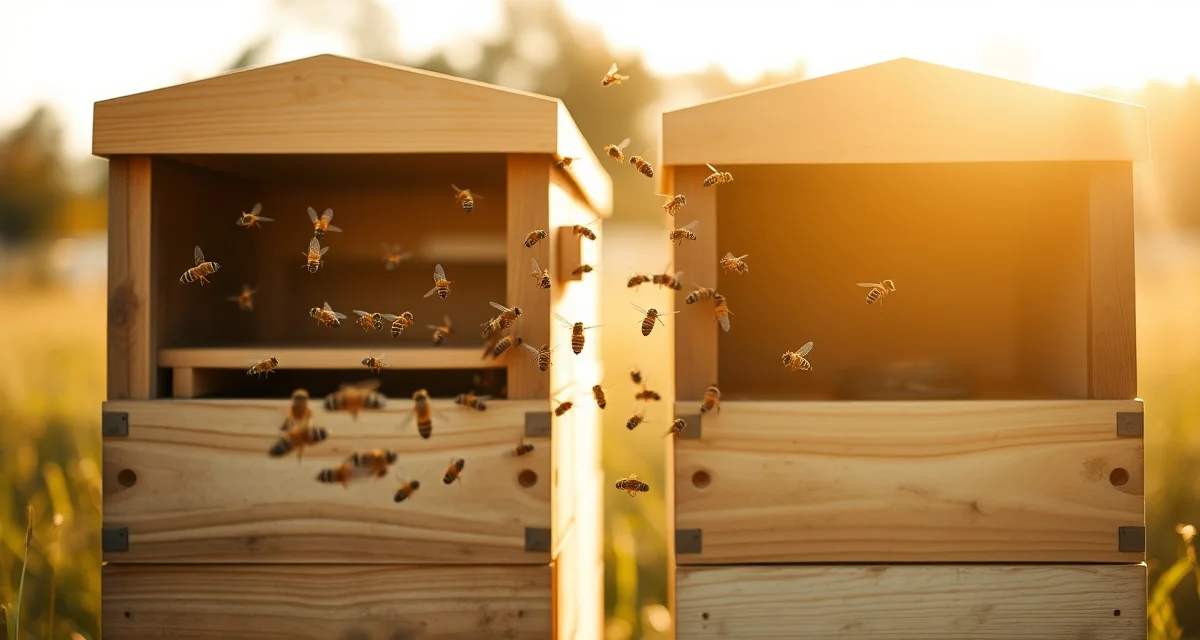
Drifting is the normal navigation error that worker bees make when returning from foraging flights. Bees orient to their own hive using sun position, landmarks, and hive odor. In apiaries with multiple hives in close proximity, particularly when hives are arranged in straight rows and look similar, worker bees routinely enter the wrong hive. These drifting bees carry their phoretic mite load with them into the recipient colony.
Drifting happens in every apiary with multiple colonies. It is a normal behavior, not a pathology. The problem arises when colonies with very different mite loads are in close proximity. A low-mite colony that receives drifting bees from a high-mite colony is continuously receiving mite imports.
Robbing is more aggressive and more effective at moving mites. When a colony is weak, dying, or recently collapsed, neighboring bees raid it for its honey stores. Robber bees return to their home colony carrying honey and varroa mites. A collapsing high-mite colony that gets robbed out by its neighbors is essentially a mite bomb that distributes its mite population across the local area.
Scale of Reinfestation
Research has shown that reinfestation can account for a significant portion of mite population growth in managed apiaries, particularly in areas with high apiary density. In some studies, 30 to 50% of mite increase in treated colonies during late summer was attributable to reinfestation from neighboring colonies rather than in-colony reproduction.
This means that treating your own colonies correctly is a necessary but not always sufficient condition for maintaining low mite levels. Your neighbors' management practices affect your mite counts.
Identifying Reinfestation in Your Records
Reinfestation produces a recognizable pattern in mite count data: mite counts that rise faster than expected after a successful treatment, particularly in colonies near the downwind or downdrift side of an apiary, or in apiaries located near other managed or feral colonies.
If your post-treatment count shows 0.4% efficacy of 90%, and six weeks later the same colony is back at 2%, that rate of increase is faster than typical in-colony reproduction alone would produce. Reinfestation is the likely explanation.
Look for patterns in your VarroaVault data: which colonies in a yard consistently rebound fastest? Are they the ones at the end of the row where drifting is more common? Are they the colonies closest to a neighboring apiary? Location patterns in high-reinfesting colonies suggest drifting or proximity to an outside source.
Reducing Drifting
Reducing drifting within your own apiary reduces internal mite exchange between your colonies. Practical steps:
Visual differentiation. Paint hive boxes different colors or mark them with different entrance patterns. Bees use visual cues to orient to their home hive. More distinctive hives see less drifting.
Spatial arrangement. Avoid straight row arrangements where all hives face the same direction and look identical. L-shaped, curved, or scattered arrangements reduce drifting. Hive entrances facing slightly different directions also help.
Entrance size standardization. If some hives have large entrances and others have reduced entrances, drifting bees preferentially enter the larger openings. Consistent entrance sizing reduces this asymmetry.
Landmark placement. Plant distinctive vegetation near individual hives. A beekeeper who places a rosemary bush next to one hive and a stone marker next to another gives bees better orientation cues.
Managing Late-Season Drifting and Robbing
Late summer and fall are the highest-risk periods for robbing and mite-carrying drifting. The nectar flow has ended, foragers are not finding much, and colonies are in a heightened robbing state. Collapsing colonies are most common in this period as the summer mite buildup peaks.
Reduce entrances in late summer and fall to limit robbing exposure. A full-width entrance on a weak colony is an invitation to robbers. Narrow the entrance to one bee width for any colony that is not at full strength.
If a neighboring colony collapses, close it immediately. Do not leave a dead-out open for robbing. Either wrap the equipment until you can deal with it or seal it completely. A slowly dying hive open for robbing is the most efficient mite distributor in your apiary.
Community-Level Reinfestation
The most significant reinfestation source for some beekeepers is feral bee populations or neighboring managed apiaries. In areas with high bee density, such as urban settings or areas with many hobby beekeepers, reinfestation pressure can undermine even excellent individual management programs.
The most effective response is engaging your local beekeeping community. Beekeepers who share information about management practices, who conduct coordinated treatment programs within a region, and who support responsible swarm removal of feral colonies reduce the regional mite burden for everyone. Individual excellence in varroa management is more effective in a community context of general competence.
FAQ
What is Preventing Varroa Reinfestation From Drifting and Robbing?
Preventing varroa reinfestation from drifting and robbing is a colony management strategy that addresses how varroa mites spread between beehives through bee movement. Even after successful treatment, mite counts can rebound quickly when bees from high-mite colonies drift into your hives or rob out collapsing neighbors. This approach combines apiary layout, hive configuration, monitoring, and coordinated treatment timing to stop mites from re-entering colonies you have already cleaned up.
How much does Preventing Varroa Reinfestation From Drifting and Robbing cost?
There is no purchase cost — preventing reinfestation is a management practice, not a product. The investment is time and attention: regular mite monitoring, adjusting hive placement, and coordinating with nearby beekeepers. Some beekeepers add entrance reducers or robbing screens, which cost only a few dollars per hive. The real cost of not doing it is far higher, as reinfestation can undo an entire season of treatment work within weeks.
How does Preventing Varroa Reinfestation From Drifting and Robbing work?
Reinfestation prevention works by limiting the two main pathways mites use to move between colonies. Drifting is reduced by staggering hive entrances, using visual markers, and avoiding straight-row layouts that confuse returning foragers. Robbing is controlled with entrance reducers, robbing screens, and promptly removing or collapsing dying colonies. Combined with synchronized neighborhood treatments, these steps cut off the mite import routes that rebuild counts after your own treatments succeed.
What are the benefits of Preventing Varroa Reinfestation From Drifting and Robbing?
The primary benefit is that your treatment results actually hold. Without reinfestation control, a colony treated to near-zero mite levels can climb back above economic thresholds before winter, undermining colony health when bees need it most. Secondary benefits include stronger overwintering survival, reduced need for repeated treatments, lower oxalic acid or miticide exposure for your bees, and more predictable colony health heading into the following spring buildup.
Who needs Preventing Varroa Reinfestation From Drifting and Robbing?
Any beekeeper managing more than one colony, or keeping bees near other apiaries, needs to address reinfestation risk. It is especially critical for beekeepers in dense suburban areas, community gardens, or near hobbyist neighbors who may not treat. Even isolated apiaries face internal drift between their own hives. If you treat but your mite counts keep rebounding despite correct application, reinfestation from drifting or robbing is almost certainly part of the explanation.
How long does Preventing Varroa Reinfestation From Drifting and Robbing take?
Reinfestation is an ongoing seasonal pressure, not a one-time event. The highest-risk windows are late summer and fall, when natural colony populations drop, robbing behavior intensifies, and collapsing untreated hives shed mites into the neighborhood. Protective measures like entrance reducers and robbing screens should go on in late July or August and stay until robbing season ends. Mite monitoring every three to four weeks through autumn tells you whether reinfestation is occurring despite your controls.
What should I look for when choosing Preventing Varroa Reinfestation From Drifting and Robbing?
Look for an approach that addresses both drifting and robbing separately, since each requires different interventions. A good reinfestation prevention strategy should include specific guidance on apiary layout, entrance management, monitoring frequency, and what to do with a dying neighboring colony. It should also cover coordinating treatment timing with other local beekeepers, which is one of the most effective but most overlooked tools for breaking the regional mite cycle.
Is Preventing Varroa Reinfestation From Drifting and Robbing worth it?
Yes, for any beekeeper who treats for varroa and still sees mite counts rebound, addressing reinfestation is one of the highest-return actions available. Treatment without reinfestation control is like bailing a boat without finding the leak. The additional effort — repositioning hives, adding entrance reducers, increasing monitoring frequency — is modest compared to the cost of repeated treatments, lost colonies, and the labor of rebuilding dead-outs. It completes the varroa management loop rather than just repeating it.