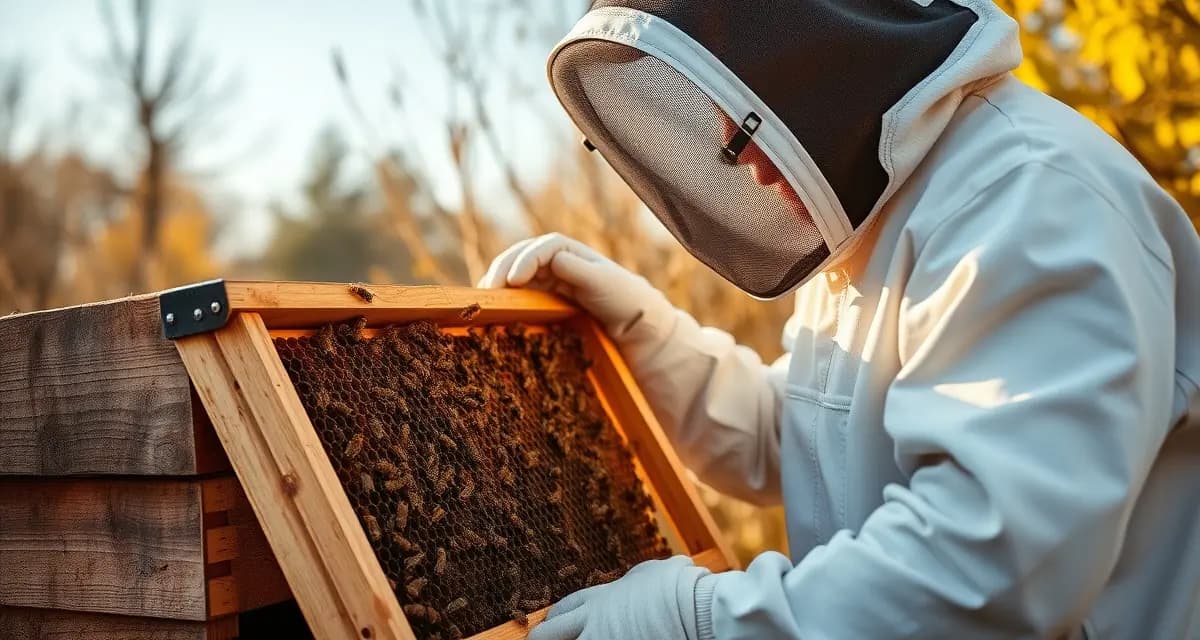
Winterizing Hives With Varroa Management Built In
Fall is the most consequential time of year for varroa management in northern climates. The bees you raise in August and September are the bees that will carry the colony through winter. If those bees are raised while mite loads are high, they will be virus-damaged, shorter-lived, and unable to form a healthy winter cluster. Getting varroa under control before the winter bees are raised is the single most important thing you can do for your colonies' survival.
Understanding the Winter Bee Connection
Winter bees are physiologically different from summer bees. They have enlarged fat bodies, live four to six times longer than summer bees, and serve as the protein reserves the colony draws on to raise spring brood. These bees are raised in late summer and early fall, roughly August through October depending on your latitude.
Varroa mites feeding on developing pupae inject viruses, particularly Deformed Wing Virus (DWV), that compromise fat body development and shorten bee lifespan. If your mite population peaks in August while winter bees are being raised, the damage is done before you ever see the fall symptoms. The colony heads into winter with compromised bees. It may still look reasonable in October but collapses between December and February.
The solution is to have mite levels under control before the winter bee-raising window opens. In the northern US, this means treating no later than mid to late August in most regions.
Fall Varroa Treatment Options
Apivar (amitraz strips) is the most common fall treatment. Strips go in after the last honey super is off and stay in for the full 6 to 8 week duration. Apivar is not temperature sensitive within normal fall ranges, which makes it reliable. For fall use, place strips in August and remove them by mid-October to early November depending on your climate.
OAV during natural broodless period. In the northern US, colonies typically become broodless by December through January as temperatures drop consistently below 50 degrees Fahrenheit. This natural broodless period is an opportunity to use oxalic acid vaporization with maximum effectiveness, since all mites are phoretic. Three treatments five days apart during confirmed broodlessness can reduce mite loads to near zero. The timing varies by year and latitude. Do not rely on calendar date alone. Verify broodlessness by inspecting before treating.
Sequential treatment. Many beekeepers use Apivar in August to knock down summer mite loads, let the strips run their full course, and follow with OAV during the December-January broodless period as a final cleanup. This two-step approach is highly effective and reduces the chance of heading into spring with residual mite pressure.
Confirming Treatment Success Before Winter
Treatment is not complete without verification. Do a mite count after your fall Apivar course finishes. An acceptable post-treatment count in fall is below 1% (1 mite per 100 bees). If you are still above 2% after a full Apivar course, the product may have been applied late, may not have been given enough time, or you may be dealing with amitraz resistance. In that case, follow with OAV or switch to a different mode of action.
Log your pre-treatment and post-treatment counts. This data tells you how well the treatment worked, flags hives with potential resistance, and gives you a starting point for spring monitoring.
Physical Winterization After Varroa Treatment
Once your varroa work is done, physical winterization follows. The order matters: complete varroa treatment first, then prepare for winter. Treating in November when brood is already sparse is less effective and may not protect winter bees that were already raised during the high-mite window.
Physical winterization checklist:
- Confirm adequate stores. Sixty to 80 pounds of honey for a northern winter, which is roughly 8 to 10 full deep frames or equivalent. Feed fondant or candy boards if stores are short.
- Reduce the entrance to deter robbing and mice. A mouse guard over the entrance works well.
- Ensure ventilation. Some moisture escaping from the hive is important. Top ventilation through a notch in the inner cover or a moisture quilt prevents condensation from dripping on the cluster.
- Remove or secure empty supers. They add unnecessary insulation problems and give mice extra harborage.
Tracking Your Winterization Protocol
Colonies that survive winter well typically had low mite counts going into fall, strong populations of healthy winter bees, and adequate stores. Colonies that die over winter often had high mite counts in August regardless of how well they were treated in October.
VarroaVault lets you log your fall mite counts, treatment dates and products, and post-treatment verification counts, giving you a complete record of each colony's winterization status. When you open hives in spring, you can correlate winter survival or losses against the fall data and refine your protocol for the following year. See the treatment threshold alerts feature for setting up reminders to count and treat during the critical August window.
FAQ
What is Winterizing Hives With Varroa Management Built In?
Winterizing hives with varroa management built in is a seasonal beekeeping strategy that integrates mite control into your fall preparation routine. Rather than treating varroa as a separate task, it prioritizes reducing mite loads before late-summer brood is raised. The goal is ensuring the winter bees — the long-lived bees responsible for colony survival — are healthy, virus-free, and capable of forming a strong cluster through the cold months.
How much does Winterizing Hives With Varroa Management Built In cost?
Winterizing hives with varroa management built in costs nothing beyond your regular treatment supplies. Oxalic acid, formic acid, and thymol-based treatments range from roughly $10 to $40 per application depending on the product and colony count. The real cost of skipping it is far higher — winter colony losses can run $150 to $300 or more per hive when you factor in package replacements, equipment, and lost production the following season.
How does Winterizing Hives With Varroa Management Built In work?
The approach works by timing varroa treatments to protect the bees raised in August through October — the winter bees. You monitor mite levels with alcohol washes or sticky boards in July and early August, treat if counts exceed 2% before winter bees are raised, and verify levels have dropped before the main winter bee cohort emerges. Treatments like oxalic acid dribble or vaporization and formic acid pads are the most common tools used during this window.
What are the benefits of Winterizing Hives With Varroa Management Built In?
The primary benefit is dramatically improved winter survival. Colonies that enter winter with low mite loads and healthy winter bees are far more likely to reach spring intact, build up quickly, and produce strong honey crops. Secondary benefits include reduced virus pressure across the entire apiary, less likelihood of mite-bombed colonies from collapsing neighbors, and a more predictable management calendar that reduces costly emergency interventions.
Who needs Winterizing Hives With Varroa Management Built In?
Any beekeeper in a northern or temperate climate where colonies overwinter needs this approach. It is especially critical for hobbyists managing just a few hives, where losing even one colony is a significant setback. Commercial and sideliner beekeepers also benefit from reducing winter deadout rates. If you live where winters are mild and brood never fully stops, your timing and treatment thresholds differ, but monitoring and mite control remain essential year-round.
How long does Winterizing Hives With Varroa Management Built In take?
The active management window runs roughly six to ten weeks, from late July through mid-September, depending on your latitude and local bloom calendar. A single oxalic acid or formic acid treatment takes one to two hours per apiary visit. The broader commitment is ongoing monitoring — plan for two to three mite washes in late summer plus at least one follow-up check after treatment. The process is not labor-intensive, but timing precision matters more than the time spent.
What should I look for when choosing Winterizing Hives With Varroa Management Built In?
Look for a complete approach that includes pre-treatment mite monitoring, a clear threshold for when to act (typically 2% or higher on an alcohol wash), an approved treatment matched to current temperatures and brood status, and a post-treatment check to confirm efficacy. Be cautious of advice that relies on a single fall treatment without monitoring, ignores brood state when selecting a product, or skips the follow-up wash that confirms mites actually dropped.
Is Winterizing Hives With Varroa Management Built In worth it?
Yes — consistently. Research and beekeeper data both show that colonies entering winter with mite loads below 2% survive at significantly higher rates than those that do not. The alternative is gambling that your colony will make it through on luck, then absorbing the financial and emotional cost of dead-outs in February. For most beekeepers, integrating varroa management into fall prep is the single highest-return action they can take in their entire season.