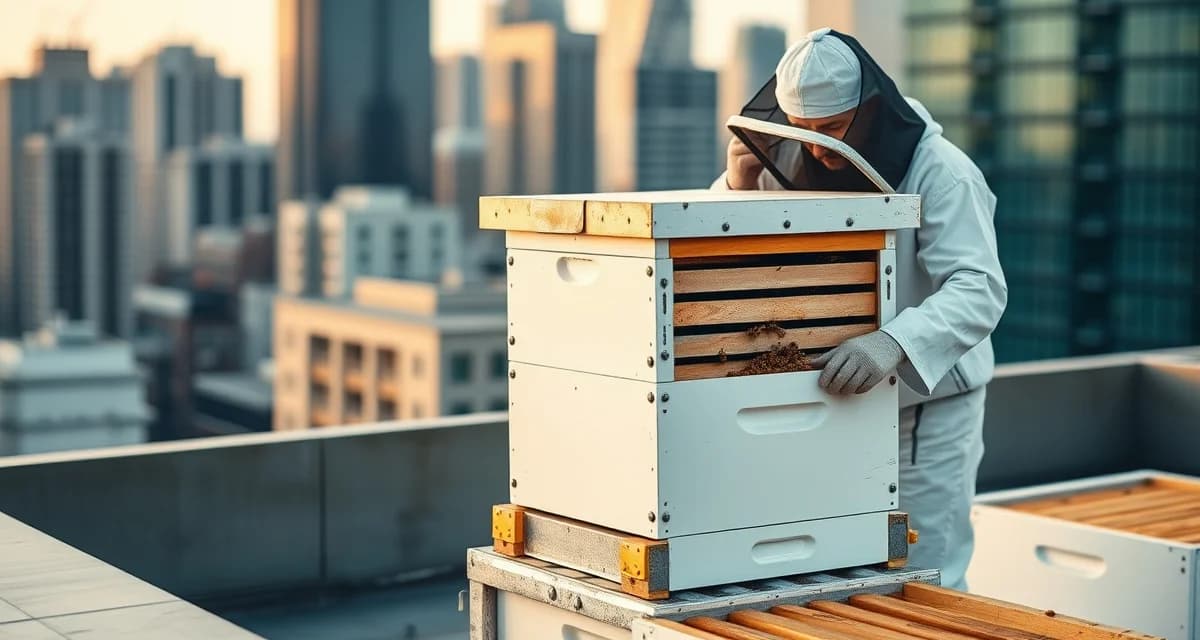
Urban Beekeeping and Varroa Management: What City Beekeepers Need to Know
Urban beekeeping is growing fast. Cities like New York, Chicago, Seattle, and Los Angeles have active beekeeping communities, and most major cities have lifted bans or relaxed restrictions on backyard hives in the past decade. But keeping bees in a dense urban environment comes with specific Varroa management challenges that are different from rural operations.
Reinfestation Is Constant in Cities
The biggest Varroa challenge for urban beekeepers is reinfestation. In a rural setting, your nearest neighbor's hives might be a mile away. In a city, feral colonies live in building cavities throughout your neighborhood, and other beekeepers may be keeping hives within a quarter mile. Foraging bees, drifting drones, and robbing behavior create constant pathways for mites to move between colonies.
This means that even if you successfully knock down your mite load with a treatment, it can rebuild quickly from external sources. Urban beekeepers typically need to test mite levels more frequently than rural beekeepers, not because their management is worse, but because the reinfestation pressure is higher. Monthly monitoring is the minimum. Testing every 3 to 4 weeks during summer is appropriate in dense urban areas.
City Regulation and Record Keeping
Most cities that permit beekeeping require registration with the city and sometimes with the state apiarist. Many urban areas require that hives be maintained in a manner that does not create a public nuisance, which in practice means well-managed, low-swarming, appropriately defensive colonies. Mite-related colony stress contributes to defensive behavior and swarm pressure, so Varroa management is directly connected to being a good neighbor.
Keep records of your registration, any inspections conducted, and your treatment history. If a neighbor complains to animal control, documentation of responsible management is your best defense.
Treatment Considerations in Dense Areas
Using oxalic acid vaporization in a backyard hive next to a neighbor's property requires sealing the hive tightly during treatment and allowing vapors to dissipate before opening the entrance. The amounts involved in a single-hive OAV treatment are small, but common courtesy and safety standards still apply. Some urban beekeepers prefer the dribble method for this reason.
Formic acid treatments are generally acceptable in urban settings but the odor is noticeable for several hours after application. Treat on a warm weekday when neighbors are likely inside and away from outdoor areas.
Apivar is the lowest-maintenance option for urban beekeepers because strips are placed inside the sealed hive and there is no airborne exposure risk.
Hive Placement and Management for Urban Settings
Place hives so the flight path is not directed at foot traffic areas or neighboring yards. A tall fence or hedge in front of the hive forces bees to fly up before heading out, which reduces neighbor conflicts. Position entrances away from property lines.
Keep colony strength moderate for urban settings. Very large colonies swarm more and may be harder to manage in tight spaces. Split aggressively in spring before swarm pressure builds.
Record Keeping for Urban Compliance
VarroaVault allows urban beekeepers to maintain complete hive records including registration numbers, location, and treatment history in one place. If a city official asks about your operation, you can demonstrate organized management. The mite monitoring and treatment records double as proof that you are running a responsible, disease-managed operation, which matters in a regulatory environment where urban beekeeping is still scrutinized.
For varroa reinfestation concerns specific to urban areas, see the varroa-reinfestation-drifting-robbing guide on VarroaVault.
FAQ
What is Urban Beekeeping and Varroa Management: What City Beekeepers Need to Know?
Urban Beekeeping and Varroa Management for city beekeepers is a practical guide covering the unique challenges of keeping bees in dense urban environments. It focuses on Varroa mite control in cities where constant reinfestation from nearby feral colonies and neighboring hives makes mite management more demanding than in rural settings. The guide covers monitoring frequency, treatment timing, local regulations, and record keeping strategies tailored to urban beekeeping conditions.
How much does Urban Beekeeping and Varroa Management: What City Beekeepers Need to Know cost?
The guide itself is free editorial content on VarroaVault. There are no paywalls or purchase requirements. Some Varroa management tools, treatments, or monitoring supplies referenced within the article carry their own costs — alcohol wash kits run roughly $10–30, and approved miticides vary by product — but reading and applying the advice in this guide costs nothing.
How does Urban Beekeeping and Varroa Management: What City Beekeepers Need to Know work?
The guide works by explaining how urban conditions specifically amplify Varroa pressure, then outlining a management framework built around that reality. City beekeepers learn to test mite levels every 3–4 weeks during summer, understand reinfestation pathways like robbing and drone drift, time treatments strategically, and keep records that satisfy local regulations while also tracking colony health trends over time.
What are the benefits of Urban Beekeeping and Varroa Management: What City Beekeepers Need to Know?
City beekeepers who follow this guidance maintain healthier colonies despite high reinfestation pressure, avoid colony collapse from undetected mite spikes, and stay compliant with municipal regulations. Frequent monitoring catches problems early, reducing the need for aggressive intervention. Better Varroa control also benefits neighboring beekeepers and local feral bee populations by lowering the overall mite load circulating through the urban bee community.
Who needs Urban Beekeeping and Varroa Management: What City Beekeepers Need to Know?
Any beekeeper keeping hives in a city, suburb, or dense residential neighborhood needs this guidance. It is especially relevant for beginners who learned Varroa management from rural-focused resources and are now finding that standard treatment schedules are not holding. Rooftop beekeepers, community garden beekeepers, and anyone within a quarter mile of other managed or feral colonies will face the reinfestation dynamics this guide addresses.
How long does Urban Beekeeping and Varroa Management: What City Beekeepers Need to Know take?
Reading the guide takes under 15 minutes. Implementing the practices is ongoing — monthly mite washes take about 20 minutes per hive, and a full treatment cycle with an approved miticide typically spans 6–8 weeks. The time investment is higher than rural beekeeping due to more frequent monitoring, but consistent short sessions throughout the season prevent the larger time loss of trying to rescue a collapsing colony.
What should I look for when choosing Urban Beekeeping and Varroa Management: What City Beekeepers Need to Know?
Look for guides that are specific to urban conditions rather than repurposed rural advice. Good urban Varroa content addresses reinfestation pressure explicitly, recommends monitoring intervals appropriate for dense areas, and references current approved treatments. It should also acknowledge local regulation variability across cities. VarroaVault's guide covers all of these and links to city-specific resources for beekeepers in New York, Chicago, Seattle, and Los Angeles.
Is Urban Beekeeping and Varroa Management: What City Beekeepers Need to Know worth it?
Yes, for any city beekeeper struggling with recurring mite problems despite treating, this guidance is directly actionable and worth applying. Urban reinfestation is a real and often overlooked cause of treatment failure. Understanding that mite loads can rebuild from external sources — not just internal colony reproduction — changes how you schedule monitoring and interpret test results. Applying these practices consistently is one of the highest-leverage things an urban beekeeper can do for colony survival.
Related Articles
- Beekeeping Software for Arizona Beekeepers: Year-Round Varroa Management
- Beekeeping Software for Colorado Beekeepers: High-Altitude Varroa Management
- Beekeeping Software for Florida Beekeepers: Year-Round Brood and Varroa Management
- Beekeeping Software for Illinois Beekeepers: Midwest Varroa Management