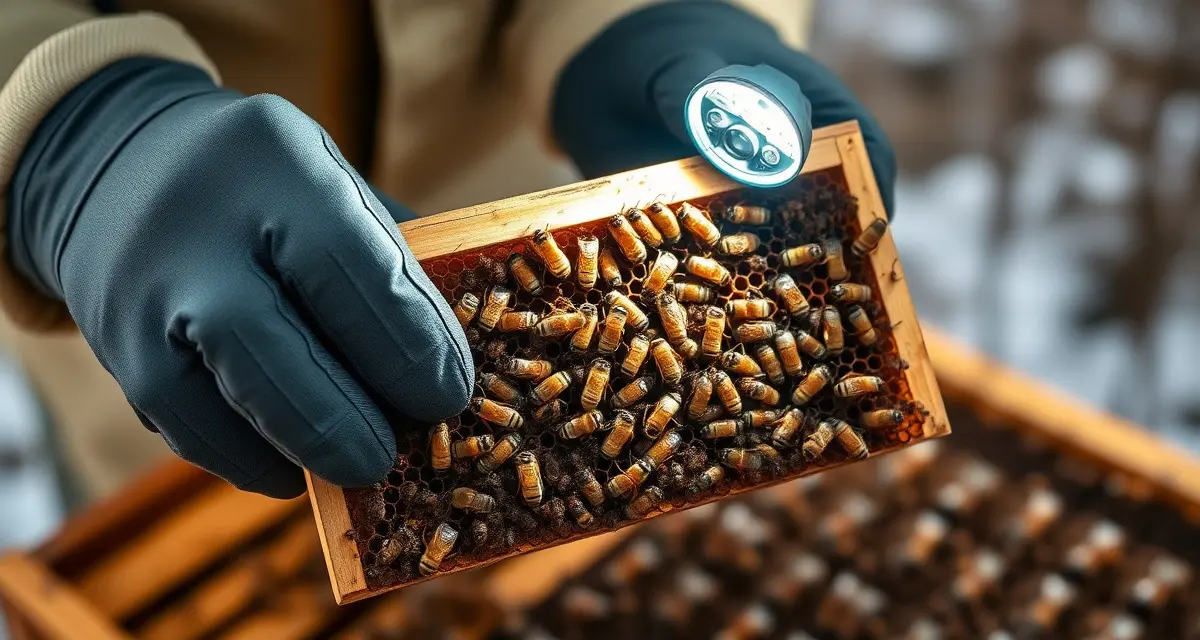
December Varroa: Monitoring Deep Winter Clusters in Mild Climates
In most of the US, December means the bees are in cluster and your varroa management season is over until spring. In zone 7 and warmer, it means something different. A December OA dribble on a fully broodless mild-climate colony can reduce the spring mite starting point by up to 70%, setting up a much cleaner beginning to the next season. If you're in coastal California, Florida, Texas, or the Gulf states, December is not a month to ignore.
VarroaVault activates a December mild-day monitoring prompt for zone 7+ users on forecast days above 50 degrees Fahrenheit. You don't need to watch the weather calendar yourself. When conditions are right, the app tells you.
TL;DR
- December treatment decisions should be based on a current mite count, not calendar date alone
- Temperature constraints in December may limit which treatments are effective in your climate zone
- PHI timing for December treatments affects when honey supers can be added or must be removed
- Log a mite count before starting any December treatment to calculate efficacy post-treatment
- VarroaVault's treatment reminders for December account for regional temperature and flow calendars
- Recording December treatment dates creates the audit trail needed for state inspection compliance
Zone-by-Zone December Guidance
Zone 4-5: Your colonies are in tight cluster. Do not open the hive. Heft the back of the hive to estimate stores weight. Listen at the entrance for the hum of a live cluster. That's your December management. No varroa treatment is practical at these temperatures, and opening the hive in December in northern climates can break the cluster and cause bee death. Your job is to not disturb them.
Zone 6: December is marginal. Warm spells above 50F do occur, but they're unpredictable. If you have a warm day (55F+) with no rain and a broodless colony confirmed from November inspection, an OA dribble is technically viable but the value depends on whether your colony is truly broodless. Most zone 6 colonies are broodless by December, which is the good news. If you missed a November treatment window, a December warm spell is a legitimate backup opportunity.
Zone 7-8: December treatment is a real option. Many colonies in zone 7-8 have their only reliable broodless period in December and January, making this the optimal treatment window for OA efficacy. A single OA dribble on a broodless colony at 50F+ achieves 90%+ efficacy. Apply 5ml of Api-Bioxal 3.2% solution per seam of bees, not exceeding 50ml total. Do it in the afternoon when bees are somewhat loosened from the cluster.
Zone 9-10: In coastal California and South Florida, many colonies never fully stop brood rearing. You may need an extended OA vaporization protocol (3 treatments at 5-day intervals) rather than a dribble because brood may be present even in December. Monthly monitoring remains appropriate year-round for zone 9-10 beekeepers.
What to Look for at a December Check
If you do open a hive in December in a mild climate, keep it brief:
- Confirm the cluster is present and well-positioned (ideally centered in the hive with food above and beside it)
- Look for signs of brood, specifically capped worker brood on central frames
- Check for stores: 30+ pounds for a single-deep, 60+ for a double-deep
- Note any dead bees, yellow/black streaking (dysentery), or unusual odor
Don't pull frames or inspect brood pattern. You're looking, not investigating. Keep the hive open less than 2 minutes.
Connecting December to Your Annual Plan
December is a good month to review the prior year's management in VarroaVault, even if you're not actively treating. The annual summary activates on January 1, but you can pull your data in December to start thinking about next season's program. The varroa winter monitoring guide has the full December-through-March monitoring plan for cold-climate beekeepers.
For mild-climate beekeepers, December is part of your active management season. Plan your December treatment window when you log your November check in VarroaVault, and set a weather alert for the next 50F+ day.
Frequently Asked Questions
Should I open my hive in December to check for varroa?
In cold climates (zone 4-5), no. Opening the hive in December at temperatures below 45F risks breaking the cluster and causing unnecessary bee death. Instead, listen for the hum of a live cluster and heft the hive for stores weight. In mild climates (zone 7+), a brief opening on a warm day above 50F is acceptable if you're quick. Limit yourself to a visual check and close up immediately. Don't pull frames for a full inspection in December regardless of your climate zone.
Can I do an OA dribble in December?
Yes, if two conditions are met: your colony is broodless, and the temperature is above 45-50F during application. If your colony is raising brood in December (common in zone 9-10), OA dribble achieves much lower efficacy because it only kills phoretic mites on adult bees, not mites inside capped cells. In that case, an extended OA vaporization protocol is more effective. For zone 7-8 beekeepers with genuinely broodless December colonies, a single OA dribble is highly effective and well worth doing on the right day.
Does VarroaVault tell me when it is safe to check hives in December?
Yes. VarroaVault's mild-day monitoring prompt activates for zone 7+ accounts when forecast temperatures exceed 50F. The notification tells you the forecasted high temperature, the expected duration above threshold, and whether current colony records suggest a treatment is due. In cold-climate zones, VarroaVault switches to a winter monitoring mode that replaces treatment reminders with passive colony health check prompts and a spring planning timeline. The app adapts its messaging to your climate zone automatically.
How do I know if my varroa treatment is working?
Run a mite count 2-4 weeks after the treatment ends and compare it to your pre-treatment count. The efficacy formula is: ((pre-count - post-count) / pre-count) x 100. A result above 90% indicates effective treatment. Results below 80% should trigger investigation for possible resistance, application error, or reinfestation. Log both counts in VarroaVault to track efficacy trends across treatment cycles.
How often should I check mite levels in my hives?
At minimum, once per month (every 3-4 weeks) during the active season. Increase to every 2 weeks when counts are near threshold or after a treatment to verify it worked. In fall, monitoring frequency matters most because the window to treat before winter bees are raised is narrow. VarroaVault's monitoring reminders can be set to your preferred interval for each apiary.
What records should I keep for varroa management?
Each record should include: date of count or treatment, hive identifier, monitoring method used, number of bees sampled, mites counted, infestation percentage, treatment product name and EPA registration number, dose applied, treatment start and end dates, and PHI end date. State apiarists typically expect this level of detail during inspections. VarroaVault captures all of these fields in a single log entry.
What is December Varroa: Monitoring Deep Winter Clusters in Mild Climates?
December Varroa monitoring in mild climates refers to the practice of tracking and treating varroa mite loads in honeybee colonies during December, specifically in climate zones 7 and warmer. Unlike colder regions where bees cluster tightly and treatment is impractical, beekeepers in coastal California, Florida, Texas, and Gulf states can exploit broodless or low-brood periods in winter to apply treatments like oxalic acid dribble, achieving up to 70% mite load reduction before the spring buildup begins.
How much does December Varroa: Monitoring Deep Winter Clusters in Mild Climates cost?
Monitoring your colonies for varroa in December costs nothing beyond your existing testing supplies — a sticky board, alcohol wash kit, or sugar roll. If you use VarroaVault to track counts and receive treatment timing alerts for your climate zone, the app handles the calendar and temperature logic for you. The real cost of skipping December monitoring in mild climates is a high spring mite starting point, which compounds quickly as brood rearing accelerates in February and March.
How does December Varroa: Monitoring Deep Winter Clusters in Mild Climates work?
In mild-climate zones, December monitoring works by identifying days above 50°F when the colony is broodless or minimally brooded. On those days, a mite count — via alcohol wash or sugar roll — gives you an accurate picture of the mite population. If counts justify treatment, an oxalic acid dribble applied to a broodless colony contacts mites directly on adult bees with no brood cells to hide in. VarroaVault sends monitoring prompts automatically when forecast temperatures reach the threshold in your zone.
What are the benefits of December Varroa: Monitoring Deep Winter Clusters in Mild Climates?
A December treatment in mild climates sets a dramatically lower mite baseline heading into spring, reducing the compounding effect of mite reproduction during the February-March brood expansion. Treating during a broodless window maximizes oxalic acid efficacy since all mites are exposed on adult bees. Logging the pre- and post-treatment counts creates an audit trail for tracking efficacy over seasons. Early intervention also reduces the need for more aggressive mid-season treatments and protects the colony's health during peak pollination and honey production periods.
Who needs December Varroa: Monitoring Deep Winter Clusters in Mild Climates?
Beekeepers in USDA hardiness zones 7 and warmer — including coastal California, Florida, Texas, Louisiana, and other Gulf states — need December varroa monitoring. In these regions, colonies rarely go fully dormant, meaning mite populations can continue building through winter. Hobbyist and commercial beekeepers alike benefit from December mite counts and treatment when warranted. Anyone using VarroaVault in these zones will receive automatic prompts on suitable forecast days, making this practice accessible even for newer beekeepers unfamiliar with winter management in mild climates.
Related Articles
- Before-Winter Varroa Treatment FAQ: Timing, Products, and What to Expect
- Varroa Treatment for Strong Fall Colonies: Maximizing Winter Bee Production
- April Varroa Monitoring: First Count of the New Season
- January Varroa Review: Assess Your Winter Survival and Plan for Spring
Sources
- American Beekeeping Federation (ABF)
- USDA ARS Bee Research Laboratory
- Honey Bee Health Coalition
- Penn State Extension Apiculture Program
- Project Apis m.
Get Started with VarroaVault
The information in this guide is most useful when you have your own mite count data to apply it to. VarroaVault stores every count, flags threshold crossings automatically, and builds the treatment history you need for state inspections and effective management decisions. See pricing and free tools at varroavault.com.