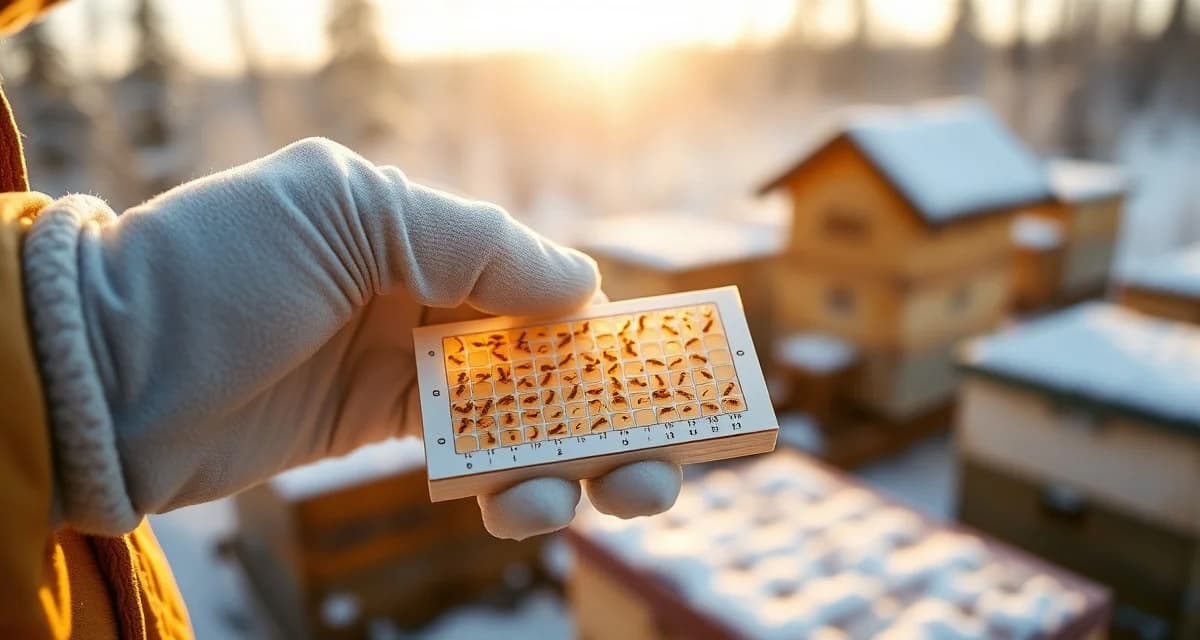
Winter Varroa Monitoring: Should You Test During Winter Cluster?
Most beekeepers stop testing once colonies cluster, but mild winter days offer monitoring opportunities that many overlook. Zone 7 beekeepers who test in January can catch post-treatment reinfestation before spring buildup begins. That's a meaningful head start on the season.
Whether winter monitoring makes sense for you depends almost entirely on where you keep bees. For most northern beekeepers in zones 3-5, winter monitoring is genuinely difficult and adds real risk of chilling brood or disturbing the cluster during cold snaps. For beekeepers in milder climates where winter temperatures regularly reach 50°F or higher, a winter count is feasible and useful.
TL;DR
- Winter colony losses caused by varroa are largely preventable with effective fall treatment before winter bees are raised
- Winter bees raised under high mite pressure in August-September have shorter lifespans and cannot sustain the cluster
- The fall treatment window (August-September in most regions) is the most important management action of the year
- oxalic acid dribble during a true broodless period (December-January in northern states) can rescue high-mite colonies
- A 1% mite threshold in fall (vs. 2% in summer) reflects the higher stakes of winter bee quality
- Track fall mite counts and winter survival rates together in VarroaVault to measure the impact of your treatment timing
When Winter Monitoring Makes Sense
Zone 7+ (mild winters, relatively frequent warm days): Winter monitoring is practical. Many zone 7 locations see temperatures above 50°F regularly through December-February. Bees may be cluster-accessible or even flying on warm days. A January mite count can catch a rising mite population before spring brood rearing amplifies it.
Zone 6 (moderate winters): Possible on mild days, typically above 50°F with the cluster accessible without chilling it. Requires care and timing. If a mid-December or early January warm spell occurs, a quick count is reasonable. Not necessary if fall treatment was verified with a post-treatment count.
Zone 5 and below (cold winters): Generally not recommended. Winter clusters in zones 5 and colder are tightly formed and cold-sensitive. Disturbing the cluster to sample bees on a cold day risks chilling brood and stressing the colony. The marginal information value doesn't justify the risk for most cold-climate beekeepers. Wait for spring.
What Does Winter Monitoring Tell You?
A winter count primarily answers one question: have mites rebounded since fall treatment?
Fall treatment, if successful, should bring your mite load to near zero. A successful broodless OA treatment in November should give you counts below 0.5% in December. If your January count shows 2% or higher, something went wrong: treatment failure, treatment that wasn't as thorough as expected, or reinfestation from nearby sources.
In milder climates where winter reinfestation is possible (zone 7 colonies with active bee flight nearby), knowing your January count level lets you decide whether a second OA treatment in late January or February makes sense before spring brood rearing begins.
How to Monitor Without Disrupting the Winter Cluster
If you decide to do a winter count, minimize disruption:
Choose a warm day: 50°F or warmer outside. The warmer the better. Never sample when temperatures are below 45°F.
Work quickly: Don't leave the hive open. Know exactly what you're doing before you open the box.
Sample from the cluster edge, not the center: Take bees from the outer frames of the cluster, not the center where the queen is and brood may be present. Disrupting the cluster center is more harmful than sampling the edges.
Use a small sample: A winter count with 200 bees is acceptable. You're not trying to get a precise threshold-level reading. You're looking for a rough indication of whether the fall treatment held or whether mite levels are concerning.
Close up promptly: Replace all frames and covers immediately. Winter inspections should take minutes, not the leisurely pace of summer inspections.
Avoid cold or windy conditions: Wind adds cold stress. On even a 55°F windy day, be more cautious than on a calm 52°F day.
Winter Monitoring Reminders in VarroaVault
VarroaVault activates a winter monitoring reminder for zone 7+ users who may have broodless but cluster-accessible colonies. The reminder appears in January and suggests checking conditions before deciding whether to count.
For zone 6 users, the system sends a conditional reminder: "If temperatures reach 55°F+ this week, consider a winter count to verify your fall treatment." This is more conservative and appropriate for the moderate-winter context.
For zone 5 and below, VarroaVault does not send winter monitoring reminders. Instead, it shifts to spring preparation mode in March, with a first-count reminder calibrated to when your zone typically breaks cluster.
The winter hive prep guide covers the full fall-to-winter preparation checklist including the fall OA treatment that reduces the need for winter monitoring. The mite count tracking app stores winter counts with the same format as any other count, so your winter data integrates cleanly into your full-season trend analysis.
Frequently Asked Questions
When should I test for varroa during winter?
In zone 7 and warmer, a January or February count is practical on mild days above 50°F. Zone 6 beekeepers can count on warm winter days if conditions allow. Zone 5 and colder: skip winter monitoring and wait for spring. If your fall treatment was verified with a post-treatment count in November, winter monitoring is optional even in mild climates unless you have reason to suspect reinfestation or treatment failure.
How do I do a mite check without disrupting the winter cluster?
Work on a warm day (50°F or above). Open quickly and directly. Sample bees from the edge of the cluster on outer frames, avoiding the cluster center where the queen and any brood are located. Collect approximately 200 bees (acceptable for a winter count, even though 300 is the summer standard). Complete your wash and close the hive within a few minutes. Work without wind if possible.
Does VarroaVault send winter monitoring reminders?
Yes, for zone 7+ users. The reminder activates in January and includes conditional guidance based on current temperature conditions. Zone 6 users receive a conditional reminder suggesting they monitor if temperatures are suitable. Zone 5 and below users receive no winter monitoring reminders but get an early spring count alert calibrated to their zone's typical cluster-break timing.
Can I treat for varroa during winter?
In northern regions where colonies form a tight winter cluster with no brood (typically December-February), oxalic acid dribble is an effective and label-approved treatment. It achieves very high efficacy during true broodless periods because all mites are phoretic. The temperature should be above 40 degrees F during dribble application for bee welfare. Vaporization is also possible but requires safe outdoor conditions for the applicator.
How do I know if my colony survived winter in good mite condition?
Do an early spring mite count (February-March in most regions) as soon as the colony is active and temperatures allow. A count below 1% suggests winter treatment was effective and the colony has a good start. A count above 2% in early spring indicates mites survived in high numbers and a spring treatment should be started promptly before brood population expands.
What is Winter Varroa Monitoring: Should You Test During Winter Cluster??
Winter varroa monitoring is the practice of testing honey bee colonies for varroa mite levels during the winter months rather than stopping after fall treatments. While most beekeepers pause testing once colonies cluster, mild winter days — particularly in zones 6 and warmer — offer a real opportunity to catch reinfestation early. It helps beekeepers assess whether fall treatments were effective and whether intervention is still needed before spring buildup begins.
How much does Winter Varroa Monitoring: Should You Test During Winter Cluster? cost?
Winter varroa monitoring itself costs nothing beyond your existing testing supplies — an alcohol wash jar, powdered sugar board, or oxalic acid vaporizer. The main investment is time and attention to weather windows. If you already have testing equipment from the active season, there's no additional cost. Oxalic acid dribble, often used during winter broodless periods, is inexpensive and widely available, typically under $20 for enough to treat multiple hives.
How does Winter Varroa Monitoring: Should You Test During Winter Cluster? work?
On a mild day above 50°F, you open the hive briefly and collect a sample of around 300 bees for an alcohol wash or sugar roll. The mite count per 100 bees gives your infestation percentage. In truly broodless colonies, oxalic acid dribble can also be applied directly onto cluster bees between frames, killing phoretic mites with high effectiveness since there's no capped brood for mites to hide in.
What are the benefits of Winter Varroa Monitoring: Should You Test During Winter Cluster??
The primary benefit is catching problems early. Beekeepers in milder climates who test in January can identify post-treatment reinfestation before spring population expansion amplifies the mite load. A December-January oxalic acid dribble during a broodless period is also one of the most effective treatments available, with minimal mite refuge in capped cells. Early detection means more options — and healthier colonies entering the critical spring buildup phase.
Who needs Winter Varroa Monitoring: Should You Test During Winter Cluster??
Winter varroa monitoring is most relevant for beekeepers in USDA zones 6 and warmer, where temperatures regularly reach 50°F in winter. Zone 7 beekeepers in the mid-Atlantic and South can realistically test in January. Northern beekeepers in zones 3–5 face genuine risk of chilling brood or disturbing clusters during cold snaps, making winter testing less practical. Any beekeeper whose fall treatment may have been late or ineffective also has reason to monitor in winter.
How long does Winter Varroa Monitoring: Should You Test During Winter Cluster? take?
The monitoring itself takes 15–20 minutes per hive on a suitable day. The bigger variable is waiting for the right weather window — a calm day above 50°F with no cold snap forecast. In northern climates that window may never reliably come. In milder zones it may occur several times between December and February. An oxalic acid dribble treatment, if needed, adds only a few minutes per hive to the same visit.
Sources
- American Beekeeping Federation (ABF)
- USDA ARS Bee Research Laboratory
- Honey Bee Health Coalition
- Penn State Extension Apiculture Program
- Project Apis m.
Get Started with VarroaVault
Winter losses are largely a fall varroa management problem. VarroaVault helps you track fall treatment timing, verify efficacy with post-treatment counts, and build the record that shows you whether your winter preparation is actually working year over year. See pricing and free tools at varroavault.com.