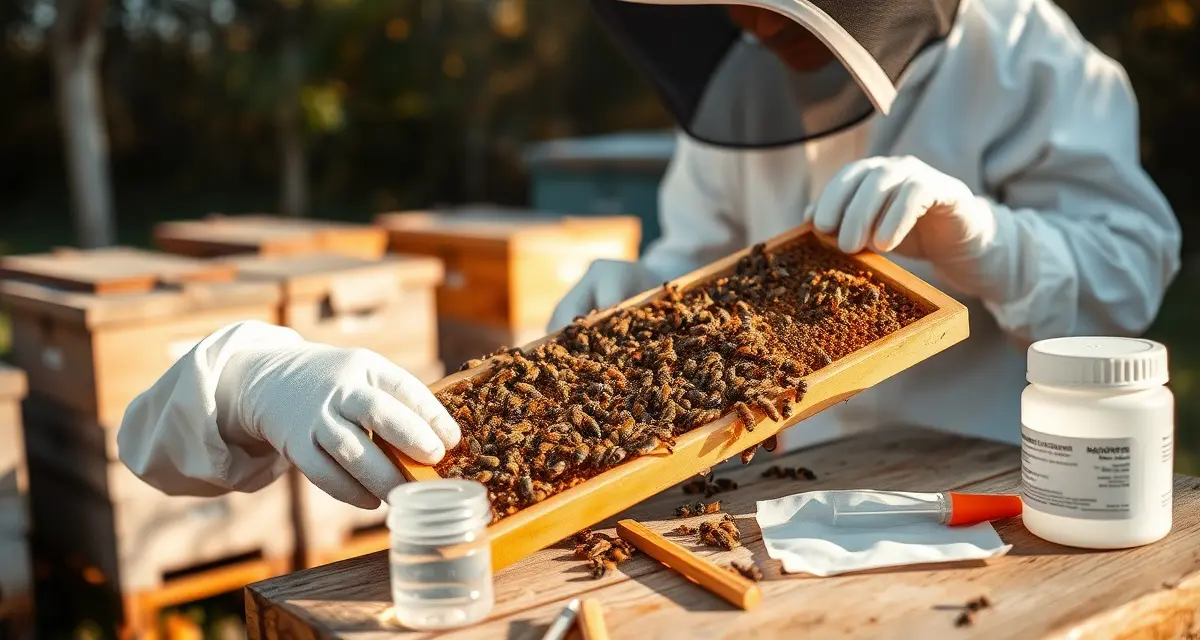
Varroa Management for 20 to 100 Hive Operations
The 20 to 100 hive range is where hobby beekeeping ends and the real business of beekeeping begins. Operations at this scale are usually generating some income from honey, package sales, or pollination contracts, but they are typically managed by one or two people rather than a full crew. Varroa management at this scale is more demanding than hobby beekeeping but has different constraints than large commercial operations.
What Changes at This Scale
With fewer than 20 hives, you can inspect every colony frequently and make individual decisions about each one. Above 100 hives, you are essentially running yard-level protocols and treating by the block. Between 20 and 100, you are in a middle zone where some individual management remains practical, but you also need system-level thinking to stay ahead of varroa.
The key shifts at this scale:
You cannot afford to count every hive every time. A 10% sample rule is practical and validated. Count a minimum of 10% of hives in each yard, with at least 3 hives sampled per yard, and always include any colonies that look off or have shown elevated counts previously.
Treatment decisions increasingly apply to whole yards. If your sample shows 3 of 5 counted hives above threshold in a yard, treat the whole yard. Individual treatment of specific hives in a yard is inefficient and the uncounted hives are likely to be above threshold too.
Records become operationally necessary, not optional. At 100 hives, your memory cannot reliably carry treatment dates, post-treatment counts, and PHI clearance dates for each colony. A record system is part of the management infrastructure.
Building a Monitoring Schedule
For a 50-hive operation across three yards, a realistic monitoring schedule looks like this:
- Count 5 to 6 hives per yard per monitoring visit (10 to 12% of total)
- Monitor every 4 weeks during active brood season (April through October in northern regions)
- Monitor every 6 to 8 weeks in late fall and early winter
- Count before and after every treatment event
This schedule generates roughly 50 to 60 mite count data points per season, which is a manageable workload and enough data to understand the mite situation in each yard.
Treatment Timing for Small Commercial Operations
The fall treatment window is the most critical for operations in northern climates. Getting below threshold before winter bees are raised in August and September protects the colony through winter. The spring treatment manages the rebound mite population before the main honey flow.
A typical annual cycle for a small commercial operation in the northern US:
- Mid to late August: Apivar strips in after the last super comes off. Strips stay for 6 to 8 weeks.
- Early to mid-October: Strips out, post-treatment mite count.
- December to January: OAV during natural broodless period if available, or no treatment if counts are below 0.5%.
- April to early May: Pre-flow mite count. Treat if above threshold using thymol or a rotation product. Remove treatment before supers go on.
- Mid-season check: Mite count in July or August before making the fall treatment decision.
Adjust this template for your specific climate. In the Southeast, the broodless period is not reliable and the schedule shifts accordingly. See the varroa management for the Southeast climate guide for regional adjustments.
Batch Treatment Logistics
Treating 50 hives efficiently requires pre-staging. Know what you are treating and with what before you arrive at each yard. Count the strips or measure the doses you need. Bring slightly more than you need to avoid running short in the field.
Log treatment as you go rather than after you return home. A dedicated app on your phone, with the yard and hive list already populated, lets you check off each hive as you treat it and catch any hives you might have skipped. Reviewing the list before you leave the yard takes 60 seconds and prevents the frustrating discovery back at home that one colony was missed.
VarroaVault's batch treatment entry is designed for exactly this workflow. You select the yard, choose the product, enter the date, and the treatment logs to all hives in the yard simultaneously. Individual hive exceptions can be noted separately.
Managing Pre-Harvest Intervals at Scale
Pre-harvest interval management is where small commercial operations most often make costly errors. Across multiple yards with different treatment dates, tracking when supers can go back on requires a system. One yard treated August 1 and another treated August 20 have different clearance dates. A chart on the wall of your honey house or a dashboard in your management software that shows PHI clearance status per yard is essential.
Set a reminder in your calendar or in VarroaVault for the PHI clearance date of every yard after each fall treatment. Do not rely on mental arithmetic in the field in spring.
When to Upgrade Your Protocol
If you are consistently losing more than 20% of your colonies over winter in the northern US, or if you are finding colonies with high post-treatment mite counts suggesting treatment failure, it is time to review your protocol. Common issues at this scale include treatments applied too late in fall, insufficient treatment duration, and rotation drift toward a single product.
The mite count log efficacy calculator gives you concrete data on whether your treatments are achieving their expected result, and the treatment rotation planner helps you confirm your rotation is genuinely diversified.
FAQ
What is Varroa Management for 20 to 100 Hive Operations?
Varroa management for 20 to 100 hive operations is a systematic approach to controlling Varroa destructor mite infestations across a semi-commercial apiary. Unlike hobby beekeeping, it relies on sampling protocols, yard-level treatment decisions, and scheduled monitoring rather than hive-by-hive inspection. It bridges individual colony care and commercial efficiency, helping operators maintain hive health, protect honey yields, and meet pollination contract obligations without requiring a full crew or large-scale equipment.
How much does Varroa Management for 20 to 100 Hive Operations cost?
Costs vary depending on treatment method and hive count, but semi-commercial operators typically spend $10 to $30 per hive per treatment cycle. Oxalic acid vaporization is the most economical option, while formic acid and synthetic miticides cost more but may suit specific timing needs. Annual treatment costs for a 50-hive operation commonly range from $500 to $2,000, not including monitoring supplies like alcohol wash kits or sticky boards, which add a modest but recurring expense.
How does Varroa Management for 20 to 100 Hive Operations work?
Varroa management at this scale works through a structured sampling and response cycle. Operators sample at least 10% of hives per yard, typically using alcohol wash or sugar roll methods, and compare counts against established thresholds. When a yard's sampled hives exceed the threshold, the entire yard is treated rather than individual colonies. Treatment products—oxalic acid, formic acid, or miticides—are applied according to temperature windows, brood status, and honey super restrictions to maximize efficacy and safety.
What are the benefits of Varroa Management for 20 to 100 Hive Operations?
Effective varroa management at this scale protects colony populations heading into critical seasons, improves overwintering survival rates, and reduces the compounding losses that can cripple a semi-commercial operation. It also reduces the time spent on reactive emergency treatments by replacing them with predictable scheduled protocols. Operations that stay ahead of mite loads consistently report higher honey yields, stronger package and nuc quality, and better reliability when fulfilling pollination contracts.
Who needs Varroa Management for 20 to 100 Hive Operations?
Beekeepers managing between 20 and 100 hives who generate income from honey sales, pollination services, or nucleus colony production need structured varroa management. This includes part-time commercial operators, sideliners supplementing farm income, and hobbyists scaling toward a full business. Anyone at this scale who relies on individual hive inspection alone will quickly fall behind mite pressure. Systematic yard-level protocols become necessary as soon as managing every colony individually becomes impractical.
How long does Varroa Management for 20 to 100 Hive Operations take?
A complete varroa management cycle—sampling, threshold assessment, treatment application, and post-treatment confirmation—typically spans four to six weeks per yard. Oxalic acid dribble or vaporization treatments take minutes per hive but require multiple applications over several weeks. Formic acid strips work over a 14-day exposure window. Alcohol wash sampling itself takes roughly 15 to 30 minutes per hive. For a 50-hive operation, a full monitoring and treatment round across all yards might take two to three weekends.
What should I look for when choosing Varroa Management for 20 to 100 Hive Operations?
Look for a program built around validated sampling methods, clear numeric thresholds, and treatment options suited to your climate and honey production calendar. Prioritize approaches that integrate yard-level decision-making rather than treating every hive regardless of mite load. Consider whether the program accounts for brood breaks, seasonal timing, and resistance management through product rotation. A good program also includes post-treatment monitoring to confirm efficacy, not just an application schedule.
Is Varroa Management for 20 to 100 Hive Operations worth it?
Yes. At 20 to 100 hives, varroa is the single greatest threat to colony survival and business viability. Without a structured management program, mite populations can crash colonies faster than you can replace them, disrupting honey production, package sales, and pollination commitments. The return on time and money invested in consistent monitoring and timely treatment far outweighs the cost of colony losses and emergency interventions. For any operator at this scale with income on the line, systematic varroa management is not optional.