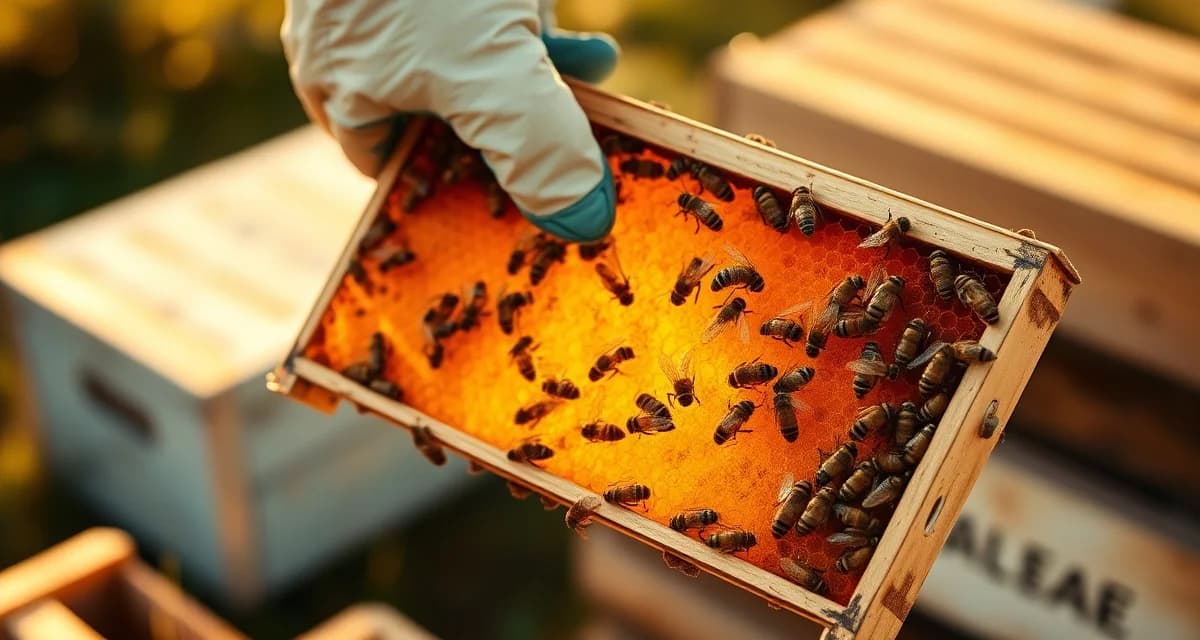
Varroa Monitoring Best Practices: Recommendations From Top Research Institutions
The Honey Bee Health Coalition recommends monthly mite counts from April through October as a minimum management standard. This recommendation comes from the most rigorous research institutions working on varroa in North America, and it's the baseline that VarroaVault's default monitoring schedule is built around.
Here's what the experts recommend, and how to implement it in your operation.
TL;DR
- Varroa monitoring should happen at minimum once per month during active season (every 3-4 weeks)
- Sticky board counts are the least accurate method; alcohol wash is the gold standard
- The 2% threshold in spring/summer and 1% in fall are widely recommended action points
- Monitoring before and after every treatment allows efficacy calculation and resistance detection
- A count from the outer frames or entrance produces lower, less accurate results than brood nest samples
- VarroaVault stores every count with date, method, and result to build a trend dataset over multiple seasons
The Source of Best Practice Guidelines
Varroa management best practices in the US are primarily developed and published by three interconnected sources:
USDA Agricultural Research Service (ARS): The USDA's Bee Research Laboratory in Beltsville, Maryland, conducts the foundational research on varroa biology, treatment efficacy, and resistance. Their published research informs treatment threshold recommendations and monitoring protocols.
Honey Bee Health Coalition (HBHC): A collaborative organization of beekeeping industry stakeholders, researchers, and extension educators. Their Varroa Management Guide synthesizes current research into practical beekeeping recommendations. The guide has been downloaded over 2 million times and is updated as new evidence emerges.
University Extension Programs: Cornell, University of Florida, NC State, Purdue, Penn State, and numerous other land-grant universities have active bee extension programs that translate research into region-specific guidance. Their published guides are often more locally specific than the national HBHC guidelines.
VarroaVault's monitoring calendar, threshold defaults, and alert timing are aligned with HBHC 2026 guidelines, which incorporate the most current research from USDA-ARS and university extension sources.
HBHC Core Monitoring Recommendations
Frequency: Monthly from April through October, with additional counts before and after every treatment event.
Method: Alcohol wash is the recommended primary method for treatment threshold decisions. sugar roll is acceptable for trend monitoring. Sticky board is acceptable for background monitoring between alcohol washes.
Sample size: 300 adult bees from the brood nest.
Sampling location: Brood nest (frames 4-6 in a 10-frame box), not the entrance or honey supers.
Thresholds:
- 2% infestation rate: treatment recommended during late summer and fall (August-October)
- 3% infestation rate: treatment recommended during the active season (April-July)
These thresholds reflect the balance between treatment cost/stress and the damage caused by high mite loads at each season point.
USDA-ARS Research-Specific Recommendations
USDA-ARS research has refined several aspects of monitoring best practice:
Pre-treatment baseline counts: USDA-ARS researchers specifically recommend counting mites 48-72 hours before treatment application to establish an accurate baseline for efficacy calculation. This practice is not consistently followed in the beekeeper community but is critical for identifying treatment failures.
Post-treatment verification: USDA-ARS recommends post-treatment counts to verify efficacy and detect potential resistance. The specific timing varies by product (7-14 days for OA and formic, 42 days for Apivar).
Resistance monitoring: USDA-ARS's Honey Bee Research Laboratory participates in national resistance surveillance. Their recommendation: any treatment achieving less than 90% efficacy in a correctly applied treatment should be reported to the state apiarist for resistance investigation.
University Extension Recommendations by Region
Extension programs tailor national guidelines for regional conditions:
Northeast (Cornell, UMaine, UVM): Emphasize the broodless window timing for winter OA dribble. Provide first frost date data for broodless period prediction. Their regional count frequency recommendation is monthly April-October with intensification in July-August.
Southeast and Florida (University of Florida): Florida's year-round brood rearing changes the approach. UF extension recommends year-round monitoring (no winter monitoring gap) and a minimum of 6 counts per year. They emphasize OA vaporization over dribble given the absence of reliable broodless periods.
Mid-Atlantic (Penn State, University of Maryland): Strong emphasis on August treatment urgency. Penn State extension has published specific research on the cost of delayed fall treatment, reinforcing the August deadline recommendation.
Midwest (Purdue, University of Minnesota): Focus on reliable fall broodless window timing and pre-winter treatment timing. Their extension publications provide region-specific first frost data for broodless period planning.
How VarroaVault Aligns With HBHC Guidelines
VarroaVault's default monitoring calendar pre-loads as the HBHC-recommended monthly schedule. Here's the alignment:
Monitoring reminders: Monthly alerts fire from April through October, matching the HBHC minimum.
Threshold settings: Default thresholds are 2% for late summer/fall and 3% for active season, matching HBHC 2026 thresholds.
Pre/post-treatment count reminders: VarroaVault prompts for pre-treatment counts at 48-72 hours before treatment and post-treatment counts at USDA-ARS recommended intervals.
Efficacy flagging: 90% efficacy threshold for treatment outcome flagging aligns with EPA label claims and USDA-ARS resistance monitoring protocols.
Checking Your Current Practices Against Best Practices
Use VarroaVault's monitoring compliance report to compare your actual testing history against HBHC recommendations:
- How many counts per year are you averaging?
- Are pre and post-treatment counts consistently logged?
- What is your average efficacy percentage across treatments?
- How many treatments per year exceed the 90% efficacy threshold?
Most beekeepers using VarroaVault for the first full season discover gaps in their monitoring frequency or efficacy tracking that they weren't aware of from paper records.
Frequently Asked Questions
What do USDA researchers recommend for varroa monitoring?
USDA-ARS researchers recommend monthly alcohol wash monitoring from April through October, pre-treatment baseline counts 48-72 hours before each treatment, and post-treatment efficacy verification at product-appropriate intervals. They specifically recommend reporting treatments achieving less than 90% efficacy to state apiarists for resistance investigation.
Does VarroaVault's alert system follow HBHC guidelines?
Yes. VarroaVault's default monitoring frequency (monthly April-October), thresholds (2% late summer/fall, 3% active season), and treatment timing guidance are explicitly aligned with 2026 HBHC Varroa Management Guide recommendations. The alert system fires based on these guidelines unless you customize your thresholds.
How do my current monitoring practices compare to best practices?
Log into VarroaVault and run the monitoring compliance report to see your actual count frequency, pre/post-treatment count completion rate, and average treatment efficacy compared to HBHC guidelines. Most beekeepers discover 1-3 gaps in their monitoring program when they see their data objectively.
How do I know if my varroa treatment is working?
Run a mite count 2-4 weeks after the treatment ends and compare it to your pre-treatment count. The efficacy formula is: ((pre-count - post-count) / pre-count) x 100. A result above 90% indicates effective treatment. Results below 80% should trigger investigation for possible resistance, application error, or reinfestation. Log both counts in VarroaVault to track efficacy trends across treatment cycles.
How often should I check mite levels in my hives?
At minimum, once per month (every 3-4 weeks) during the active season. Increase to every 2 weeks when counts are near threshold or after a treatment to verify it worked. In fall, monitoring frequency matters most because the window to treat before winter bees are raised is narrow. VarroaVault's monitoring reminders can be set to your preferred interval for each apiary.
What records should I keep for varroa management?
Each record should include: date of count or treatment, hive identifier, monitoring method used, number of bees sampled, mites counted, infestation percentage, treatment product name and EPA registration number, dose applied, treatment start and end dates, and PHI end date. State apiarists typically expect this level of detail during inspections. VarroaVault captures all of these fields in a single log entry.
What is Varroa Monitoring Best Practices: Recommendations From Top Research Institutions?
This article compiles varroa mite monitoring recommendations from leading North American research institutions, including the USDA Agricultural Research Service and the Honey Bee Health Coalition. It outlines evidence-based standards for monitoring frequency, sampling methods, and treatment thresholds. Beekeepers learn what the experts actually recommend—monthly counts from April through October, alcohol wash as the gold standard method, and how VarroaVault's tracking tools are built around these institutional guidelines.
How much does Varroa Monitoring Best Practices: Recommendations From Top Research Institutions cost?
This is a free educational resource on VarroaVault. There is no cost to read the article or access the monitoring guidelines. VarroaVault offers tools to log and track your mite counts over time, helping you apply these research-backed recommendations in your own operation. The platform is designed to make professional-grade varroa management accessible to hobbyist and commercial beekeepers alike.
How does Varroa Monitoring Best Practices: Recommendations From Top Research Institutions work?
The article translates institutional research into practical steps: sample your colonies monthly during active season using an alcohol wash, record counts with date and method, compare results against action thresholds (2% in spring/summer, 1% in fall), and test efficacy by counting before and after every treatment. VarroaVault stores this data automatically to reveal multi-season trends and help detect early signs of treatment resistance.
What are the benefits of Varroa Monitoring Best Practices: Recommendations From Top Research Institutions?
Following these best practices helps beekeepers catch dangerous mite levels before colony collapse, accurately measure treatment effectiveness, and identify potential resistance issues early. Sampling from the brood nest rather than outer frames or the entrance produces far more accurate results. Consistent record-keeping across seasons builds a trend dataset that reveals patterns invisible from single-point counts, enabling smarter, more timely management decisions.
Who needs Varroa Monitoring Best Practices: Recommendations From Top Research Institutions?
Any beekeeper managing colonies during varroa season—from backyard hobbyists to commercial operators—benefits from these guidelines. Beekeepers new to mite management gain a clear, research-backed starting framework. Experienced beekeepers can benchmark their current practices against institutional standards and identify gaps. Those who have treated colonies without pre- and post-treatment counts are especially likely to find actionable improvements here.
Related Articles
Sources
- American Beekeeping Federation (ABF)
- USDA ARS Bee Research Laboratory
- Honey Bee Health Coalition
- Penn State Extension Apiculture Program
- Project Apis m.
Get Started with VarroaVault
The information in this guide is most useful when you have your own mite count data to apply it to. VarroaVault stores every count, flags threshold crossings automatically, and builds the treatment history you need for state inspections and effective management decisions. See pricing and free tools at varroavault.com.