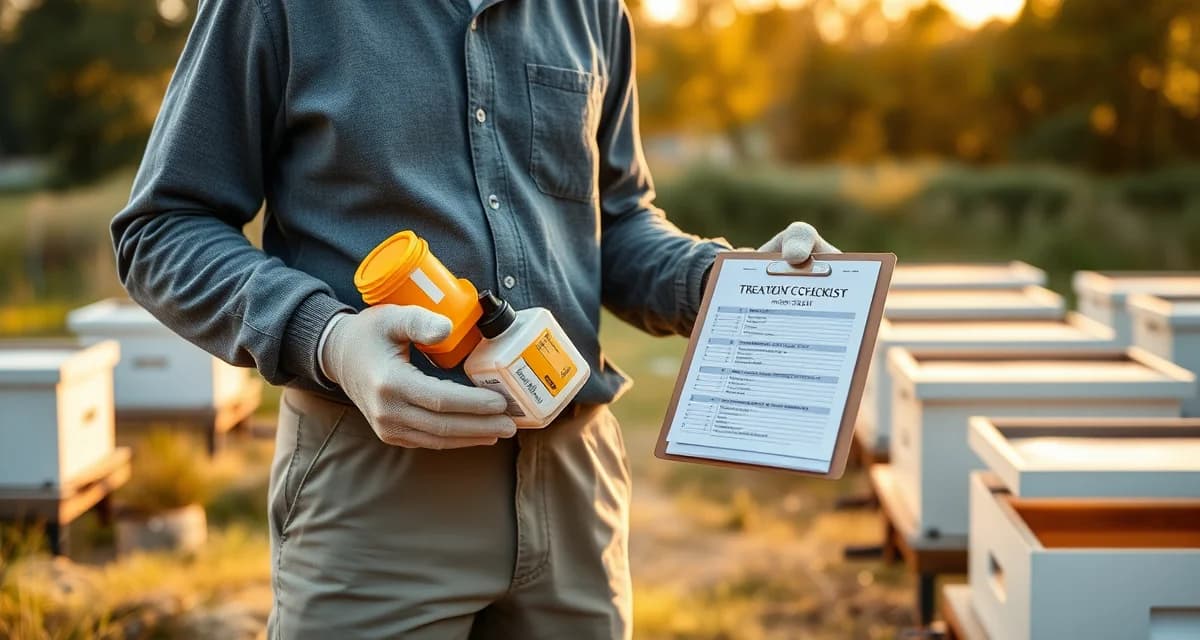
Yard Run List: How to Execute a Batch Varroa Treatment Day
Treating one apiary is straightforward. Treating six apiaries in a single day across 150 miles of road requires planning. The wrong preparation turns a treatment day into a crisis: you run out of strips at yard 4, forget which colonies already had treatments applied, or lose track of which yards you completed before rain shut down the day. A solid yard run list prevents all of this.
What a Yard Run List Is
A yard run list is a pre-planned, ordered treatment route that specifies every yard you will visit, how many colonies are in each yard, what treatment you are applying, and how much product you need to bring. It is your field order for the day, created before you leave the shop, revised if conditions change, and used as the record base for logging treatments as they happen.
Building the List Before You Leave
Start the day before the treatment run.
Step 1: Pull mite data. Confirm which yards are above threshold and need treatment this run. If you have been using VarroaVault, your monitoring records are already there. Sort yards by mite level so you can prioritize the worst-case yards first. If you run out of product or time, you treat the highest-risk yards and return for the rest.
Step 2: Count active colonies per yard. Dead-outs do not need treatment. Walk counts should be current, but even a two-week-old colony count is better than guessing. Note the number next to each yard name.
Step 3: Calculate product quantities. For Apivar: 2 strips per colony. For Formic Pro: 1 or 2 pads depending on temperature and label guidance. For oxalic acid vaporization: 2 grams per colony per application. Do not round down. Load more than you need.
Step 4: Check weather. Confirm treatment day temperatures are within range for your chosen product. Formic acid requires 50-85F daytime highs; thymol requires above 60F. If the forecast is pushing upper limits, adjust the product plan or reschedule the highest-risk yards.
Step 5: Order the route. Sequence yards geographically to minimize drive time. If you have multiple treatment products for different yards, group same-product yards together to avoid repacking mid-route. Note any access issues: locked gates, rough roads that slow loading, yards that need two people.
What to Load
A complete batch treatment day load includes:
- All treatment product for all yards, plus 10% overage
- Protective equipment: gloves, veil, jacket
- Application tools: hive tool, smoker, fuel, lighter
- Timer or phone stopwatch for timing strip placement per colony
- Permanent marker for marking newly treated hives if you use a physical system
- Trash bag for used strip packaging and used gloves
- Water and food for yourself
For oxalic acid vaporization, also pack: OAV unit, power source (battery or generator), appropriate respirator (OAV requires a properly rated respirator, not just a dust mask), safety glasses, and protective gloves rated for chemical contact.
At the Yard
Work the yard in a consistent order. Most beekeepers work front row left to right, then back row left to right, or in numbered sequence if hives are numbered. A consistent pattern prevents skipping colonies.
As you apply each treatment, log it immediately. Do not batch log at the end of the yard. Batch logging creates errors and omissions, especially if you are interrupted mid-yard.
In VarroaVault, the batch treatment entry screen lets you apply a treatment record to multiple hives in a single yard at once while noting any exceptions: a dead-out you skipped, a queenless colony you treated differently, a hive you pulled supers from before treating. These notes matter for efficacy tracking later.
Note any colony observations that warrant follow-up: a hive that seems absconded, unusual activity at the entrance, frames that looked light on stores during strip placement. These go into inspection notes, not treatment records, but capturing them on-site is faster than relying on memory.
Tracking Treatment Duration
Long-acting treatments like Apivar strips need to stay in for the full labeled duration: 6 to 8 weeks. Before you leave each yard, log the treatment start date. The removal date is calculated automatically. VarroaVault's treatment calendar will flag when removal is due for each yard.
A common failure mode in batch operations is losing track of which yards had strips placed on which date when running a rolling treatment schedule. If yard 1 was treated two weeks before yard 6, they need to come out on different dates. Without dated records, you either pull everything at the same time (undertreating the later yards) or leave strips in too long, increasing resistance pressure.
Post-Treatment Efficacy Verification
Schedule a post-treatment mite count for 14 days after the treatment removal date for each yard. This is how you confirm the treatment worked. A yard that does not show significant mite count reduction after a full Apivar treatment cycle is a flag for potential resistance and should trigger a rotation to a different chemical class on the next treatment round.
Log post-treatment counts in VarroaVault alongside the treatment record. The treatment efficacy view shows pre-treatment count, treatment applied, and post-treatment count side by side for each yard.
End-of-Day Checklist
Before you close out the treatment day:
- Confirm all yards are logged with treatment date and colony count
- Note any yards that were skipped due to time or weather, and reschedule them
- Recount remaining product and note for inventory
- Flag any colonies that need follow-up inspection
- Submit records to VarroaVault if you were logging offline
The varroa management record keeping templates page has a printable field sheet version of this checklist for operations that prefer paper backup on treatment days.
FAQ
What is Yard Run List: How to Execute a Batch Varroa Treatment Day?
A yard run list is a pre-planned field order for executing a batch varroa treatment day across multiple apiaries. It documents every yard you will visit, the number of active colonies at each location, the treatment product being applied, and the exact quantity of product needed. Built the day before your run, it serves as both your route guide and your real-time treatment log, preventing costly mistakes like running out of strips mid-route or losing track of which colonies have already been treated.
How much does Yard Run List: How to Execute a Batch Varroa Treatment Day cost?
A yard run list is a free operational tool — a document or checklist you create yourself before a treatment day. There is no purchase required. If you use a platform like VarroaVault to manage your monitoring data and treatment records, your existing mite counts and colony logs give you the inputs to build the list quickly. The only real costs are the varroa treatment products themselves, such as Apivar strips or oxalic acid, which vary by yard size and colony count.
How does Yard Run List: How to Execute a Batch Varroa Treatment Day work?
You build the list the day before your run by pulling current mite data, counting active colonies per yard, calculating product quantities, and sequencing yards by priority — highest mite loads first. On treatment day, you work down the list in order, logging each yard as you complete it. If conditions change, such as rain or a locked gate, you update the list in real time and carry notes forward to the next run rather than relying on memory.
What are the benefits of Yard Run List: How to Execute a Batch Varroa Treatment Day?
A yard run list eliminates the most common batch treatment failures: running out of product mid-route, double-treating colonies, skipping yards, and losing accurate records. Treating yards in mite-load order ensures your highest-risk colonies are handled first if time or product runs short. The list also creates a field record that feeds directly into your treatment logs, keeping your compliance documentation accurate and giving you a reliable data trail for evaluating treatment efficacy across the season.
Who needs Yard Run List: How to Execute a Batch Varroa Treatment Day?
Any beekeeper managing multiple apiaries benefits from a yard run list, but it becomes essential once you are covering more than two or three yards in a single day. Commercial and sideliner operations running five, ten, or twenty yards across long routes have the most to gain. If you have ever arrived at a yard unsure whether you already treated it, run short on strips, or lost a day to poor sequencing decisions, a yard run list solves each of those problems directly.
How long does Yard Run List: How to Execute a Batch Varroa Treatment Day take?
Building a yard run list takes roughly thirty to sixty minutes the evening before your treatment day, once your mite data and colony counts are current. The treatment day itself varies by route size — a six-yard run across 150 miles with 200 colonies might take eight to ten hours including drive time. Having the list ready before you leave eliminates time lost to on-the-fly calculations, yard sequencing decisions, and product shortfalls that would otherwise extend or derail the day.
What should I look for when choosing Yard Run List: How to Execute a Batch Varroa Treatment Day?
A good yard run list should include every apiary address or GPS coordinate, current active colony counts, the specific treatment product and dose per yard, total product needed for the full route, yards sequenced by mite load priority, and space to log completion notes in the field. Look for a format you can update in real time and reference without pulling over. Digital tools that connect mite monitoring records directly to run planning reduce manual entry errors significantly.
Is Yard Run List: How to Execute a Batch Varroa Treatment Day worth it?
For any operation covering multiple yards in a single day, yes. The cost of a failed treatment day — wasted strips, a second drive across 150 miles, untreated high-mite colonies heading into winter — far exceeds the thirty minutes it takes to build the list. Beyond logistics, the yard run list produces accurate per-colony treatment records that support compliance requirements and give you season-over-season data to improve your varroa program. It is one of the lowest-effort, highest-return habits in commercial apiary management.
Sources
- Honey Bee Health Coalition Varroa Management Guidelines
- USDA AMS Honey Bee Health Surveys
- Project Apis m. Best Management Practices